
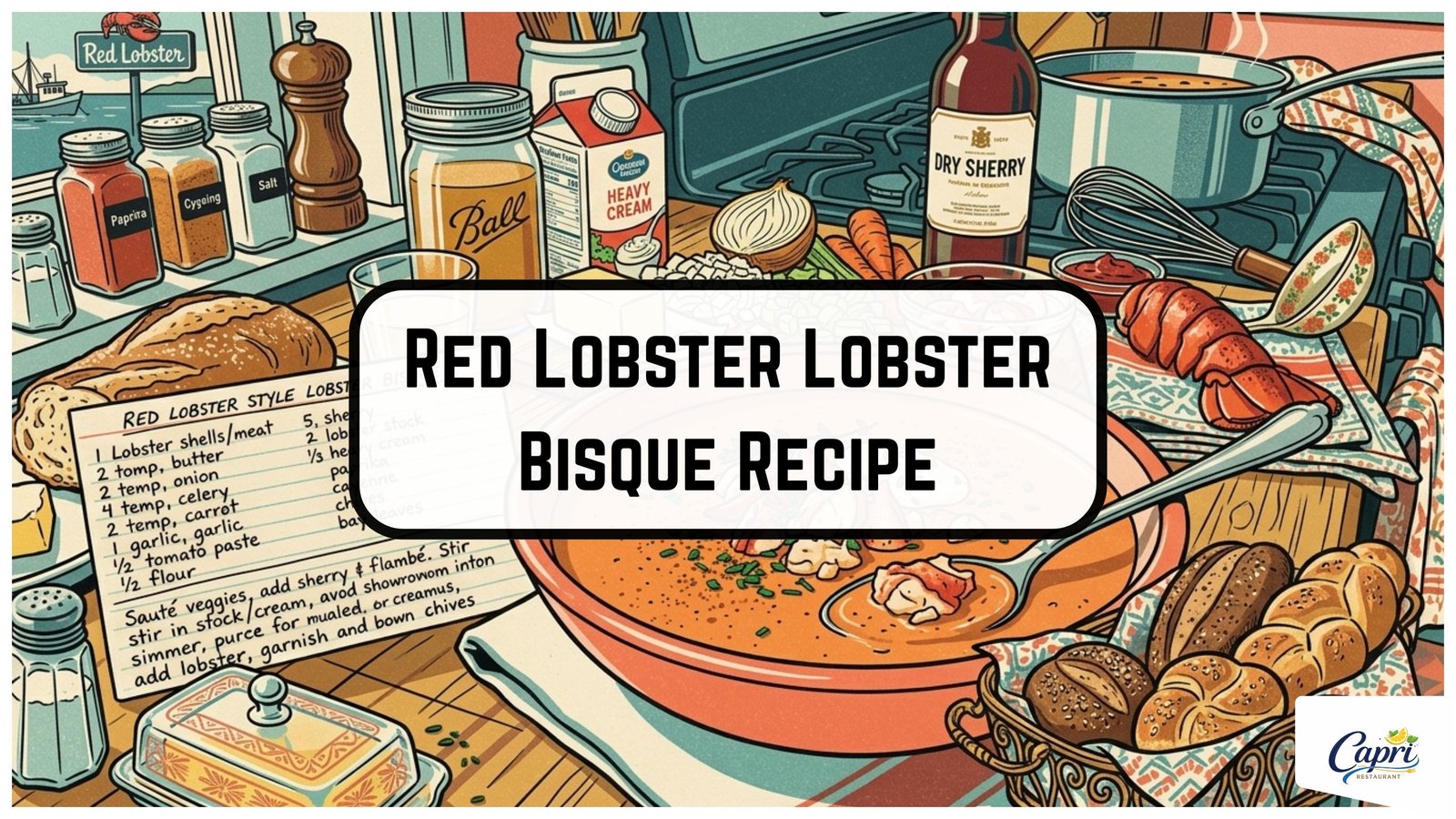

Red Lobster Lobster Bisque
Ingredients
Equipment
Method
- Step 1 — Bring the court bouillon to a boilCombine the water, white wine, and fish stock in your large Dutch oven or stockpot and bring to a full rolling boil over high heat. This liquid forms the flavor backbone of your entire bisque — the wine and fish stock ensure it is already building depth before the lobsters ever go in. While it comes to a boil, set up your workspace: have your tongs ready, a cutting board nearby, and a heatproof container ready to receive the strained broth. Resist the urge to salt the broth at this stage — the shells will contribute their own salinity as they cook.
- Step 2 — Cook the lobstersUsing your tongs, lower the lobsters into the boiling broth topside (back) down. Reduce the heat to medium, cover the pot, and cook for 6 minutes. Using your tongs, carefully turn the lobsters over, cover again, and cook for another 6 minutes. The shells should be bright red all over and the meat should be just opaque through — do not overcook at this stage, as the lobster meat will go back into the bisque at the end and cook slightly more. Remove the lobsters from the broth with tongs and set them on your cutting board to cool.
- Step 3 — Extract the lobster meat and simmer the shellsOnce the lobsters are cool enough to handle (about 10–15 minutes), work systematically to remove all the meat: crack the claws, pull the tails free, and dig into the knuckles and walking legs for every last morsel. Dice the meat into ½-inch cubes, transfer to a small bowl, cover, and refrigerate until needed. Place all the empty shells back into the broth, reduce the heat to a low simmer, and cook uncovered for 20 minutes. This shell-simmering step is what separates a deep, complex bisque from a thin one — the shells release gelatins, minerals, and concentrated flavor that no amount of store-bought stock can replicate.
- Step 4 — Strain and chill the broth. Pour the shell broth through a fine-mesh sieve set over a large heatproof container, pressing the shells firmly with the back of a spoon to extract every last drop of liquid. Discard the shells. You should have approximately 8–9 cups of deeply flavored lobster broth. Set this aside to cool, or transfer it to the refrigerator — you will be adding it cold to the roux base in the next steps, which helps control the thickening process.
- Step 5 — Sauté the aromaticsReturn your now-empty Dutch oven to the stovetop over medium heat. Add the melted butter and let it heat until it shimmers but does not brown. Add the diced onion, carrot, celery, and garlic, and sauté for 3–4 minutes, stirring frequently, until the vegetables are softened and the onion is translucent. You want them fully tender at this stage because they will be pureed later — any crunch left in the vegetables now will result in an uneven texture in the finished bisque.
- Step 6 — Deglaze with cognac. Pour the cognac (or brandy) directly into the pot with the softened vegetables and stir, scraping up any browned bits from the bottom of the pot. Let it cook for 1–2 minutes until the sharp alcohol smell has burned off and only the fruit and oak fragrance of the spirit remains. This step adds a layer of complexity that is subtle but unmistakable in the finished soup — it is the note that makes people ask what you put in it.
- Step 7 — Build the roux. Sprinkle the flour over the vegetables and cognac mixture and stir vigorously with a wooden spoon or silicone spatula, coating everything evenly. Continue stirring constantly over medium heat for 2–3 minutes, until the mixture has turned a pale blond color and smells nutty and buttery rather than raw and floury. Do not rush this step — undercooked flour creates a starchy, gluey texture in the finished bisque and a slightly raw taste. The roux is ready when it pulls away from the sides of the pot slightly and the color has deepened to a light golden hue.
- Step 8 — Add the tomatoes, spices, and broth. In the container of reserved lobster broth, stir in the diced tomatoes, paprika, thyme, and ground red pepper so they are evenly distributed. Begin adding this cold broth mixture to the roux, pouring it in a slow, steady stream while whisking constantly to prevent lumps from forming. Add about a cup at first to temper the roux, whisk until smooth, then add the remaining broth in larger additions. Bring the whole mixture to a gentle simmer over medium-low heat, then cook uncovered for 30 minutes, stirring every 5 minutes to prevent the thickened base from scorching on the pot bottom.
- Step 9 — Blend to a smooth bisque. Remove the pot from the heat. Working in small batches (never more than half-full), carefully ladle the hot bisque into a countertop blender and blend each batch on high until completely smooth and velvety, about 45 seconds per batch. Pour each blended batch into a clean pot or large bowl. Alternatively, use an immersion blender directly in the pot for a less smooth but equally acceptable result. A countertop blender produces a silkier texture because it creates more friction and incorporates more air — if presentation matters, it is worth the extra dishes.
- Step 10 — Add the lobster and cream, then serve. Return the pureed bisque to the pot over medium-low heat. Add the diced lobster meat and the heavy cream, stirring gently to combine. Heat until the bisque is just barely simmering and the lobster meat is warmed through — this takes about 3–4 minutes. Do not boil the bisque after adding the cream; high heat can cause the cream to separate and the lobster to toughen. Taste and adjust seasoning with salt and additional ground red pepper as needed. If the bisque is thicker than you'd like, thin it with a splash of milk or water. Ladle into warmed bowls and serve immediately.
Video
Notes
- The shell broth is everything: The flavor depth of this bisque lives entirely in the lobster shell broth. Simmering the shells for the full 20 minutes after the lobsters are removed is the single most important step. Skipping or shortening it produces a noticeably thin, one-dimensional soup. Press the shells hard against the sieve when straining — that last bit of concentrated liquid matters.
- Cognac is not an optional flavor: Brandy or cognac does far more than add alcohol here — it contributes caramel, oak, and dried fruit notes that bind the lobster, tomato, and cream together into something that tastes greater than the sum of its parts. Dry sherry is the best substitute. A cooking wine or cheap brandy will work in a pinch, but the difference is noticeable.
- How to know when the roux is ready: The blond roux should look and smell like buttered popcorn — pale gold in color, pulling slightly from the pot sides, and smelling nutty rather than raw. If it still smells starchy, cook it another minute. If it darkens to a medium brown, reduce the heat immediately — a dark roux will give the bisque a bitter edge.
- Most common mistake — boiling after adding cream: Once the heavy cream goes in, never let the bisque reach a full boil. High heat after this point causes the fat to separate and the soup to look curdled rather than velvety. Keep the heat at medium-low and heat gently until the lobster is just warmed through.
- Variation — Sherry and tarragon: Replace the cognac with dry sherry and add ½ teaspoon of dried tarragon along with the thyme. Tarragon has a natural affinity with shellfish and gives the bisque a distinctly French character.
- Variation — Spicy Cajun bisque: Double the cayenne to ½ teaspoon, add ½ teaspoon of smoked paprika alongside the sweet, and finish with a few dashes of hot sauce in each bowl. Serve with cornbread rather than crusty bread.
- Variation — Shrimp and lobster bisque: Replace one of the lobsters with 300g of large raw shrimp. Cook the shrimp shells in the broth alongside the lobster shells for added depth, and dice the shrimp meat along with the lobster at the finish.
- Make-ahead instructions: The bisque base (up to and including the blending step, but before adding lobster and cream) can be made up to 2 days ahead and refrigerated. Reheat gently over medium-low heat, then stir in the cream and lobster meat to order. This actually improves the flavors as the tomato, paprika, and thyme have more time to develop.
- Storage: Refrigerate leftover bisque in an airtight container for up to 3 days. The cream may cause slight separation on reheating — stir gently over low heat and it will come back together.
- Reheating: Always reheat over low to medium-low heat, stirring frequently. Never microwave on high — uneven heat will cook the lobster meat further and may break the cream. Stovetop reheating in a saucepan is strongly preferred.
- Freezing: Bisque with cream does not freeze well — the cream separates on thawing. If you want to freeze a batch, do so before adding the cream and lobster. Freeze the blended base for up to 2 months, then thaw overnight in the refrigerator, reheat gently, and finish with fresh cream and lobster meat.
- Dietary notes: This recipe is not suitable for dairy-free or lactose-intolerant diets as written. For a lighter version, substitute half-and-half for the heavy cream — the result will be thinner but still flavorful. For gluten-free, substitute the all-purpose flour with a 1:1 gluten-free flour blend or 3 tablespoons of cornstarch whisked into the cold broth before adding.
- Serving suggestions: Serve with warm, crusty sourdough or buttered oyster crackers for dipping. A simple green salad with a sharp vinaigrette provides a clean counterpoint to the richness. For a full seafood dinner, follow the bisque with grilled fish or shrimp scampi over linguine.
- Scaling note: This recipe doubles well for 8 servings — use the same pot but increase the simmer time on the broth by 10 minutes to ensure full flavor extraction from the additional shells. Blend in larger batches and finish gently.
What is the Red Lobster Lobster Bisque?
The Dish at a Glance
Red Lobster Lobster Bisque is a smooth, cream-enriched French-style soup built entirely around the flavor of whole cooked lobster. Unlike chowders, which are chunky and milk-based, a bisque is defined by its velvety, fully pureed texture and the technique of extracting flavor from the shellfish itself — shells, bodies, and all — before those elements are strained out and the concentrated broth becomes the foundation of the soup. The diced lobster meat is added back at the very end, so every bowl contains both the deep broth flavor and the firm, sweet texture of the actual lobster.
Red Lobster has served this bisque as a signature item for decades, and it has developed a devoted following that keeps people coming back to the restaurant specifically for it. The version shared here traces directly back to the restaurant’s own recipe, noted for its balance of richness, subtle heat, and pronounced cognac depth — characteristics that distinguish it from the blander, cream-heavy bisques found at lesser seafood restaurants.
The French Origins of Bisque
The word bisque comes from the French, and the technique is classically French in origin. Traditional bisques were made by cooking crustaceans — lobster, crab, crayfish, or shrimp — in wine, grinding the shells into the soup for body and color, and finishing with cream. The incorporation of a flour-based roux to thicken (rather than ground shells) is a more modern, approachable adaptation, but the spirit of the dish — using every part of the crustacean to build maximum flavor — remains intact.
Red Lobster’s version adheres to the classical approach in one important respect: the lobster shells are returned to the broth after the meat is removed and simmered for an additional 20 minutes, extracting the deep, gelatinous, intensely oceanic flavor that no amount of store-bought stock can replicate. This is the step that makes the bisque taste genuinely restaurant-quality rather than like something from a can.
What Makes It Special
Three things set this bisque apart from most home versions. First, the layered liquid foundation — water, white wine, and fish stock combined before the lobsters ever go in, giving the broth a complex starting point. Second, the cognac deglaze, which adds a non-obvious but unmistakable depth of flavor that is the signature of upscale seafood cooking. Third, the full-blending technique, which produces a completely smooth, silk-textured soup where the mirepoix vegetables, tomatoes, and thickened broth become a single, unified whole rather than a textured stew with cream poured over it.
NUTRITION
Calories: 520 kcal (per 1 serving, based on 4 servings)
| Nutrient | Per Serving |
|---|---|
| Protein | 28g |
| Total Fat | 34g |
| Saturated Fat | 20g |
| Carbohydrates | 18g |
| Fibre | 2g |
| Sugar | 5g |
| Sodium | 780mg |
| Cholesterol | 195mg |
Values are approximate and will vary by ingredients used, lobster size, and portion size.
BENEFITS of Red Lobster Lobster Bisque:
1. It Delivers Exceptional Protein in a Single Bowl
Each serving of this bisque contains approximately 28 grams of protein — primarily from the lobster, with contributions from the dairy. Lobster is one of the leanest high-protein seafoods available, with almost no saturated fat in the meat itself. The richness of the bisque comes almost entirely from the butter and cream, which means you are getting genuine nutritional substance from the protein source rather than from heavily processed or fatty animal products.
2. Lobster Is Rich in Specific Micronutrients
Lobster is one of the best dietary sources of selenium — an antioxidant mineral that supports thyroid function and immune response. It also provides meaningful amounts of zinc (important for immune health and wound healing), copper (for iron absorption and energy metabolism), phosphorus (for bone health), and Vitamin B12 (essential for nerve function and red blood cell production). These are nutrients that are difficult to obtain in meaningful quantities from most common protein sources, making lobster a genuinely valuable food beyond its luxury status.
3. The Tomato Base Contributes Lycopene
The diced tomatoes and paprika in the bisque base provide lycopene — a powerful antioxidant associated with reduced risk of certain cancers and cardiovascular disease. Lycopene is fat-soluble, which means it is better absorbed when consumed alongside fat. Conveniently, this bisque provides plenty of fat in the form of butter and cream, making it an unusually bioavailable source of the compound compared to eating raw tomatoes alone.
4. It Is an Extraordinary Special Occasion Dish
Beyond its nutritional profile, the real benefit of this bisque is the experience it creates. Very few home-cooked dishes signal genuine effort, skill, and care the way a from-scratch lobster bisque does. Serving it at a dinner party, Valentine’s Day dinner, anniversary meal, or holiday gathering communicates something about the occasion that a simpler dish cannot. It is the kind of soup that stops conversation when it arrives at the table and starts it again immediately.
5. It Is More Economical Than Ordering at a Restaurant
A bowl of lobster bisque at a seafood restaurant typically costs between $12 and $22 per serving. This recipe makes 4 generous servings for a total ingredient cost of $45–$65, depending on lobster prices in your area — roughly $11–$16 per serving, comparable to or cheaper than dining out, and dramatically superior in freshness and customizability. If you use frozen lobster tails instead of live lobsters, the cost drops further to approximately $30–$40 for the batch.
6. The Technique Is Transferable
Learning to make this bisque properly — building a shell broth, constructing a roux-thickened base, deglazing with spirits, and finishing with cream — teaches a suite of classical French cooking techniques that apply far beyond this single recipe. The same method produces excellent crab bisque, shrimp bisque, and even roasted red pepper bisque. Every time you make this soup, you are building foundational kitchen knowledge that makes everything else you cook better.
BEST COMBINATIONS
Bread Pairings
Crusty bread and bisque are one of the great pairings in all of soup cookery. The best options here are:
- Sourdough boule, thickly sliced and lightly toasted: The fermented tang of sourdough provides just enough acid to cut through the cream, and its open crumb structure absorbs the bisque beautifully. This is the pairing most likely to be found at upscale seafood restaurants.
- Warm oyster crackers: The traditional American seafood soup accompaniment — small, neutral, and crunchy, they provide textural contrast without competing with the bisque’s flavor.
- Garlic crostini: Thin slices of baguette toasted with butter and rubbed with raw garlic. The garlic note complements the bisque’s aromatics and adds a savory crunch.
- Parker House rolls: Pillowy, slightly sweet, buttery dinner rolls are a deliberate counterpoint to the bisque’s savory richness — the contrast works particularly well at a formal dinner.
Course Pairings
As a first course, this bisque pairs naturally with:
- Grilled or pan-seared fish as a main: Halibut, cod, sea bass, or salmon provide a complementary seafood continuity without repeating the lobster. Keep the fish simply prepared — a lemon beurre blanc or herb oil, nothing heavy — so it doesn’t compete with the bisque’s richness.
- Caesar salad between the bisque and main: The sharp, acidic dressing and crisp romaine act as a palate cleanser between the rich soup and whatever follows. This is a classic steakhouse sequence that works equally well at a seafood dinner.
- Lobster tail as a main: Double down on the theme. Serving a bisque followed by a simply broiled lobster tail with drawn butter is an unapologetically indulgent seafood dinner that is appropriate for truly special occasions.
- Prime rib or beef tenderloin: The classic surf-and-turf approach — open with lobster bisque, close with a magnificent cut of beef. The richness of both requires that the middle of the meal be light, hence the Caesar salad suggestion above.
Wine Pairings
Lobster bisque is one of the most versatile dishes for wine pairing because its cream base bridges white wine and light red wine territory. The best options:
- White Burgundy (Chardonnay): The definitive pairing. An oaked, full-bodied Burgundy or California Chardonnay mirrors the bisque’s creaminess and adds complementary butter and toasted oak notes. This is the choice for a formal occasion.
- White Bordeaux (Sauvignon Blanc blend): The grassy, citrusy acidity of a Bordeaux Blanc cuts through the cream and lifts the lobster flavor. More refreshing than Chardonnay, better if you’re serving multiple courses.
- Dry Champagne or Blanc de Blancs: The effervescence and high acidity of Champagne is extraordinary with cream-based seafood soups — the bubbles cleanse the palate after every sip and the brioche and citrus notes of a good Champagne echo the bisque’s cognac and lobster elements.
- Dry rosé: A structured, dry Provençal rosé — not sweet — bridges the cream and shellfish beautifully with its mineral backbone and strawberry-citrus profile.
- Pinot Gris (Alsatian style): Rich, slightly off-dry, with honeyed stone fruit notes — an unexpected but very successful pairing that plays off the bisque’s tomato sweetness and paprika warmth.
Temperature and Serving Context
- Serve this bisque in winter or cold weather — it is an inherently warming, indulgent soup that feels most at home in the context of a cold night, a candle-lit table, and a glass of something serious. It works less well as a summer dish.
- For a dinner party, bisque can be finished and portioned into warmed bowls up to 10 minutes before guests sit down, covered loosely with foil, and held in a very low oven (80°C / 175°F) without degrading. This frees you from last-minute kitchen work.
Yes, and this is the most practical substitution for most home cooks. Use two 8-ounce frozen lobster tails — thaw them overnight in the refrigerator before using. Cook them in the broth for 8–10 minutes (shells on), then remove, extract the meat, and return the shells to the broth exactly as the recipe directs. The flavor of the broth will be slightly less complex than with live whole lobsters, but the difference is modest, and the cost savings are significant. Supplement with an extra cup of fish stock to compensate.
Lumps form when cold liquid hits a hot roux too quickly, or when the roux hasn’t been stirred continuously. The fix is straightforward: blend the bisque as directed in Step 9, which will smooth out any lumps entirely. If you want to prevent lumps next time, add the cold broth in a very slow, thin stream at first — no faster than a tablespoon every few seconds — while whisking vigorously, until the roux has fully absorbed the liquid and is smooth. After the first cup or two, you can add the rest more quickly.
You can, but the bisque will taste noticeably flatter. If you need to avoid alcohol entirely, substitute the cognac with 2 tablespoons of Worcestershire sauce mixed with 2 tablespoons of good apple juice — this approximates the sweet, slightly funky depth the cognac provides. Dry sherry is the best alcohol-based alternative if cognac is unavailable, and it produces a very slightly sweeter, more delicate result.
Two things cause rubbery lobster: overcooking during the initial poach, and boiling the bisque after the meat is added at the end. For the initial cook, 6 minutes per side is correct for a 1¼–1½ lb lobster — pull them even if the timing feels short, because they will warm through again in the finished bisque. At the finish, add the lobster to the off-heat bisque (or very low heat), stir gently, and heat only until just warmed through. Never boil the bisque once the lobster and cream are in.
Absolutely — this is in fact the recommended approach. Make the bisque base through Step 9 (fully blended, but without the cream or lobster meat added) up to 2 days in advance. Refrigerate the base and the diced lobster meat separately. The day of your dinner, reheat the base gently over medium-low heat, stir in the cream, add the lobster, heat through, and serve. The base actually develops better flavor after a day in the fridge as the tomato, paprika, and thyme have time to fully integrate.
This is almost always caused by shortcutting the shell-simmering step. The 20 minutes of simmering shells in the broth after the lobsters are removed is what builds the concentrated, gelatinous backbone the bisque needs. If the broth tastes thin after straining, reduce it on the stove for 10–15 minutes before proceeding. Also, ensure your roux is cooked to the correct blond stage — an undercooked roux won’t provide adequate thickening.
Add whole milk or additional warm fish stock, one tablespoon at a time, stirring after each addition until the consistency is right. Avoid adding water if you can help it — it dilutes flavor along with thickness. The bisque should coat the back of a spoon and flow slowly when you tilt the bowl, similar to heavy cream rather than a gravy.
The cream component can be replaced with full-fat coconut cream for a dairy-free version — the flavor will be slightly different, with a very subtle coconut note, but the texture is comparable. Replace the butter in the roux with a high-quality neutral oil or dairy-free butter such as a plant-based block (not spread). The result is an interesting variation rather than a replica, but it is genuinely delicious in its own right.
As written, the ¼ teaspoon of ground red pepper (cayenne) produces a gentle, background warmth that most people would describe as mild to medium. The heat is present but not front-and-center — it registers as a warm finish rather than a sharp bite. If you are sensitive to heat, reduce it to ⅛ teaspoon. If you want a noticeably spicy bisque, increase to ½ teaspoon and add a few dashes of hot sauce at the finish.
The cognac or brandy is added in Step 6 and cooked for 1–2 minutes, which evaporates the vast majority of the alcohol. However, trace amounts of alcohol may remain, which is a consideration for families with young children or those who avoid alcohol for any reason. The bisque can be made without any cognac and will still be very good — see the substitution in the FAQ above. The cayenne level as written is mild enough for most older children, but reduce or omit it for younger or heat-sensitive palates.