
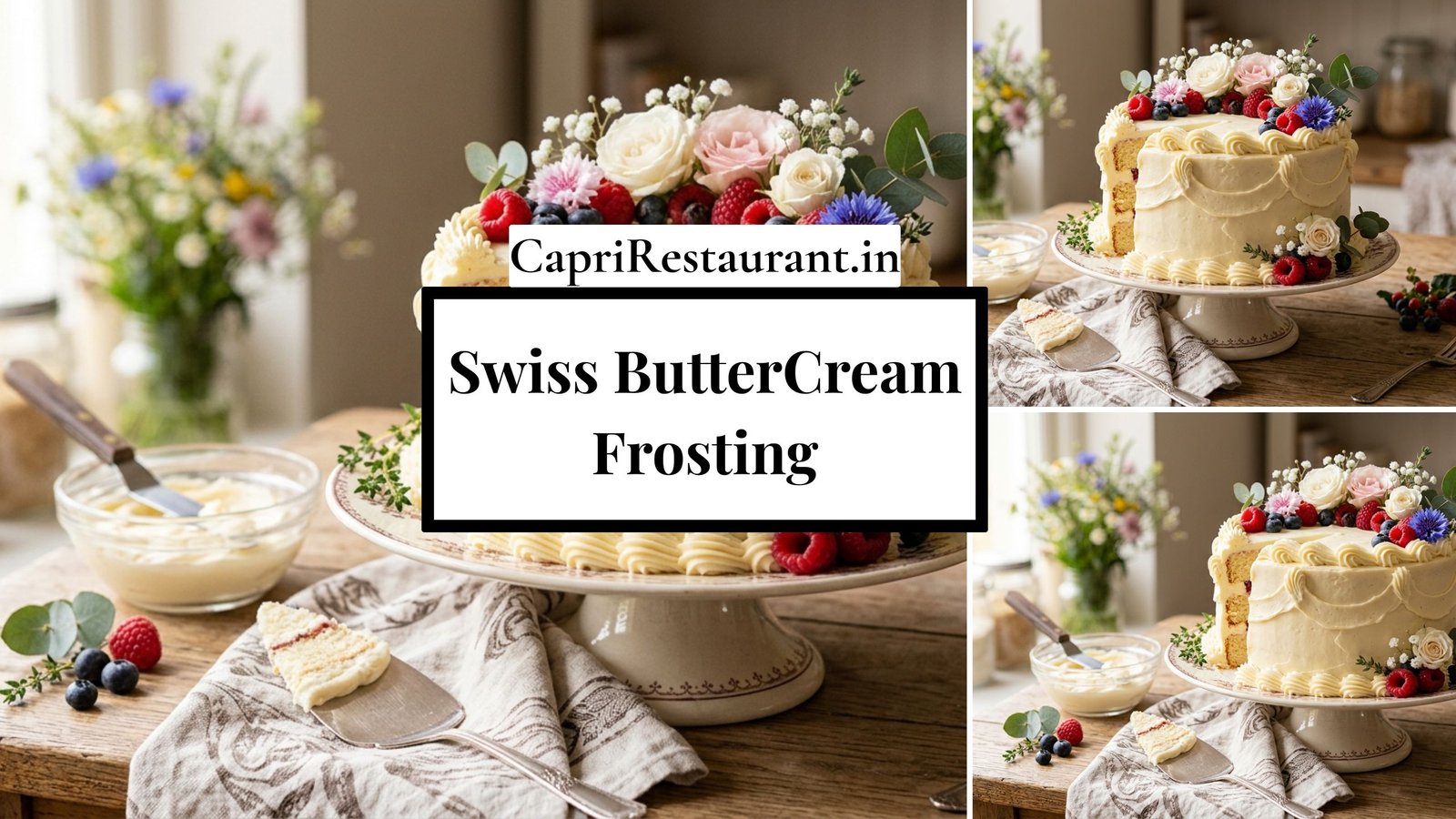
Swiss Meringue Buttercream Frosting
Swiss Meringue Buttercream (SMBC) is the silkiest, smoothest frosting you can make at home — far less sweet than American buttercream, never grainy, and beautifully stable for piping and cake decorating. It is made by gently cooking fresh egg whites and granulated sugar over a double boiler, whipping them into a glossy stiff meringue, then slowly beating in softened butter until the mixture transforms into a cloud-like, velvety frosting. It holds its shape beautifully, spreads like a dream, and can be flavored in endless ways.
Ingredients
Equipment
Method
Group 1 — Set up and cook the egg whites
- Step 1 — Prepare your equipmentBefore starting, make sure your mixing bowl, whisk, and all utensils are completely clean and completely free of any grease or fat — even a tiny trace of fat will prevent the egg whites from whipping properly. Wipe the bowl and whisk with a paper towel dampened with white vinegar, then dry completely. This takes 60 seconds and is worth every second.
- Step 2 — Combine egg whites and sugarSeparate your eggs carefully, placing only the egg whites into the clean heatproof mixing bowl. Add the granulated sugar and whisk briefly by hand until combined. Set aside the yolks in an airtight container in the fridge for another use.
- Step 3 — Cook over a double boilerFill a medium saucepan with about 1 inch of water and bring it to a gentle simmer over medium heat. Place the bowl of egg whites and sugar over the saucepan, making sure the bottom of the bowl does not touch the water. Whisk the mixture constantly and continuously — do not stop — for 3–5 minutes until all the sugar is completely dissolved and the mixture reaches 72°C / 160°F on a thermometer. To test without a thermometer, rub a little between your fingers — it should feel completely smooth with absolutely no graininess. Remove immediately from heat.
Group 2 — Whip the meringue
- Step 4 — Whip to stiff peaksTransfer the bowl to your stand mixer fitted with the whisk attachment. Beat on medium-high speed for 10–15 minutes until the meringue is thick, glossy, and forms stiff peaks — meaning the peak stands straight up without drooping when you lift the whisk. The bowl must feel completely neutral to the touch (neither warm nor cool) before you add the butter. A warm bowl will melt the butter and ruin the frosting. If it is still warm, keep whipping until it cools.
- Step 5 — Add the butter slowlySwitch to the paddle attachment if you have one (this reduces air bubbles for a silkier finish). With the mixer running on medium-low speed, add the softened butter one tablespoon at a time, waiting until each piece is fully incorporated before adding the next. Do not rush this step. The mixture will likely look curdled or soupy at some point during this process — this is completely normal. Keep adding butter and keep mixing. It will come together.
- Step 6 — Whip until smoothOnce all the butter is incorporated, increase the speed to medium-high and whip for 2–3 minutes until the frosting is silky, creamy, and smooth. Add the vanilla extract, pinch of salt, and any flavoring additions. Mix on low speed until fully combined. If adding gel food coloring, add it now on low speed.
Group 3 — Troubleshooting and finishing
- Step 7 — If the frosting is too soupy or runnyThis happens when the butter was too warm or the meringue was still warm when butter was added. Do not panic. Place the entire mixing bowl (with the frosting in it) in the refrigerator for 20 minutes, then return it to the mixer and beat on medium-high until it thickens and comes together. If still runny, refrigerate for another 15–20 minutes and repeat. Do not refrigerate for more than 20 minutes at a time or the butter will solidify.
- Step 8 — If the frosting looks curdled or lumpyAgain, do not panic — this is the most common stage that beginners stop at, thinking the frosting is ruined. It is almost certainly not. Simply keep mixing on medium speed. Within 3–5 minutes, the frosting will emulsify and turn smooth and glossy. If it seems very cold and curdled, briefly warm the outside of the bowl with your hands or a warm towel to raise the temperature slightly, then continue mixing.
- Step 9 — Use, store, or flavorYour Swiss meringue buttercream is ready to use immediately. Spread or pipe onto completely cooled cakes and cupcakes. If making ahead, store in an airtight container at room temperature for up to 2 days, in the refrigerator for up to 5 days, or freeze for up to 3 months. To use from refrigerated: bring fully to room temperature, then beat on medium speed with the paddle attachment for 2–3 minutes until creamy again. To use from frozen: thaw overnight in the fridge, then bring to room temperature and re-whip.
Video
Notes
- Butter temperature is everything: Butter that is too warm turns the frosting soupy. Butter that is too cold causes curdling. The ideal temperature is around 16–18°C (60–65°F) — cool to the touch, but soft enough for your finger to press in with slight resistance. Take it out of the fridge 30–40 minutes before using, not longer.
- Use fresh egg whites only: Carton egg whites (pasteurized) do not whip reliably into stiff meringue and are not recommended for this recipe. Fresh eggs from the shell give the best, most stable results.
- Granulated sugar only: Do not substitute powdered (icing) sugar. The cooking step dissolves granulated sugar completely and is part of what creates the smooth, non-grainy texture.
- Clean equipment is non-negotiable: Any trace of fat, oil, or egg yolk on your bowl, whisk, or spatulas will prevent the egg whites from whipping. Wipe everything with vinegar and dry before starting.
- The curdled stage is normal: Almost every batch of SMBC looks curdled at some point when butter is added. Keep mixing—it will come together smoothly within minutes.
- Coloring tips: Always use gel-based food coloring, not liquid. Add it at the very end on low speed. To counteract the butter’s natural pale yellow color, add a half drop of violet gel coloring to make the frosting appear bright white.
- Chocolate: Add 170g melted, cooled dark chocolate after the butter stage
- Lemon: Add 1 tbsp lemon zest + 2 tsp fresh lemon juice
- Raspberry or Strawberry: Add 2 tbsp strained purée
- Coconut: Replace vanilla with ½ tsp coconut extract + 2 tbsp coconut milk powder
- Coffee / Espresso: Add 2 tbsp cooled strong espresso
- Almond: Replace vanilla with ½–¾ tsp almond extract