
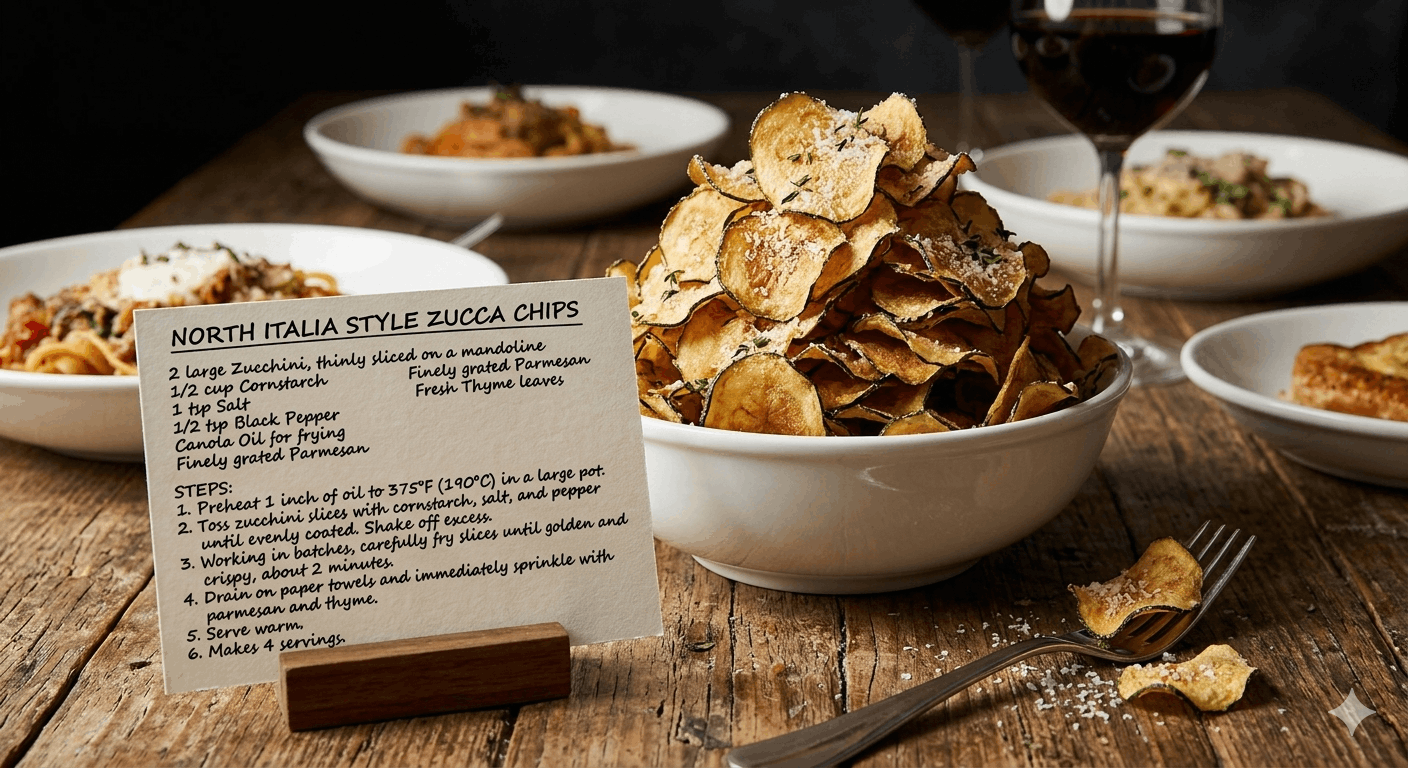

Zucca Chips North Italia Recipe
Ingredients
Equipment
Method
- Step 1 — Slice the zucchini razor-thin and dry thoroughly. Wash the zucchini under cold water and dry each one completely with a clean kitchen towel — any surface moisture will cause violent splattering when the slice enters the hot oil. Using a mandoline set to its thinnest setting (approximately ⅛ inch / 3mm) or a very sharp chef's knife held at a consistent angle, slice the zucchini into rounds. If using a knife, work slowly and deliberately — uneven thickness is the primary reason home zucca chips turn out inconsistent, with some pieces overdone and others still raw and limp. The target thickness is thin enough that you can just barely see through a slice when held up to light, but not so fragile that it tears when dipped in batter. Lay the sliced rounds on a clean kitchen towel or paper towels in a single layer and press gently to absorb any surface moisture. Allow them to air dry for 5 minutes while you make the batter.
- Step 2 — Combine the dry ingredientsIn a medium mixing bowl, combine the all-purpose flour, cornstarch, baking powder, salt, pepper, and sugar. Whisk briskly for 30 seconds until everything is uniformly blended — uneven dry mixing means pockets of baking powder or cornstarch in the finished batter, which can produce uneven texture. Set this bowl aside.
- Step 3 — Add the cold sparkling water and vinegar — do not overmixPour the cold sparkling water and the vinegar into the dry ingredient bowl. Use a fork or whisk to stir gently — 10 to 12 strokes only. The batter should be smooth but may have a few small lumps, and this is correct. The cardinal rule of tempura-style batters is that they must not be overmixed: overmixing develops gluten in the flour, which produces a thick, chewy, bready coating rather than the sheer, shattering crust you are after. The finished batter should be noticeably thinner than pancake batter — more like cream than a thick batter — and it should look visibly bubbly from the sparkling water. Use the batter immediately after mixing; as it sits, the carbonation dissipates and the gn develops, both of which reduce the crispiness of the finished chips.
- Step 4 — Heat the oil to the correct temperaturePour enough neutral frying oil into your heavy-bottomed pot or deep skillet to reach a depth of at least 1 inch — 1.5 inches is better for more consistent submersion. Place over medium-high heat and bring to 350°F (175°C), monitoring with your thermometer. This temperature is deliberate: higher than 375°F burns the delicate batter before the zucchini can heat through; lower than 325°F means the batter absorbs oil rather than immediately setting into a crust, producing greasy, limp chips. While the oil heats, set up your draining station: wire cooling rack set over a baking sheet, with the salt close at hand for immediate seasoning.
- Step 5 — Dip, shake, and fry in small batches. Working with 5 to 8 zucchini rounds at a time (no more), dip each slice into the batter using tongs or your fingers, lift it out, and shake it firmly once or twice over the bowl to remove any excess batter — the coating should be thin and nearly translucent, not thick and gloopy. Lower the coated slice gently into the oil, laying it away from you to prevent splattering. The chip should immediately begin sizzling actively and floating toward the surface of the oil — this is the sign your oil is at the correct temperature. Fry for 2 to 3 minutes total, turning once about halfway through, until the chips are a uniform light golden color. Do not wait for deep golden-brown — the chips continue to cook and darken on the rack after being removed from the oil. Between each batch, allow the oil to return to 350°F before adding the next — this takes approximately 30 to 60 seconds. Overcrowding the pot drops the oil temperature dramatically and is the single most common cause of soggy, oil-saturated chips.
- Step 6 — Drain on a wire rack and season immediatelyRemove each chip from the oil with tongs or a spider skimmer and transfer directly to the wire rack. Do not stack the chips. Give each one a light blot with paper towels if desired, then immediately — while each chip is still glistening hot — season generously with flaky sea salt. The salt applied to a hot chip adheres to the surface and becomes part of the flavor; salt added after the chip cools slides off and sits on the plate. The chips are ready to serve as soon as the current batch is seasoned — they are best within 5 minutes of coming out of the oil, while the batter is at its most shatter-crisp.
- Step 7 — Serve immediatelyPile the chips on a warm plate or a shallow bowl lined with parchment and bring them to the table at once. At North Italia, they are served simply — a generous mound of golden chips, nothing else on the plate, with any dipping sauce offered on the side rather than poured over. This keeps the batter dry and crispy for as long as possible. Do not cover or tent the plate, which traps steam and softens the chips within minutes.
Video
Notes
- Cold sparkling water is the most important batter ingredient: The carbonation creates air bubbles throughout the batter that expand explosively when they hit the hot oil, producing a coating that is light, shatteringly crisp, and paper-thin rather than thick and bready. Use it straight from the refrigerator or chill it in a glass of ice water for 5 minutes before mixing. Never substitute still water — the texture difference is immediately and dramatically obvious.
- Do not overmix the batter — ever: 10 to 12 gentle strokes is the absolute maximum. Overmixing develops gluten strands in the flour that make the coating dense, chewy, and thick. Lumps in the batter are not only acceptable — they are a sign you have not overmixed. The batter should look like thin cream with a few small lumps, not a smooth, uniform paste.
- Oil temperature is your quality control: Below 325°F, the batter sits in the oil absorbing fat before it can set — resulting in a greasy, limp chip. Above 375°F, the batter browns and burns before the zucchini heats through. The ideal window is 350–365°F. If you do not have a thermometer, the wooden-spoon test is your guide: drop the handle into the oil and you should see a moderate, steady stream of small bubbles — not a violent boil, not silence.
- Season immediately or not at all: Salt applied to a cold chip does not adhere — it sits loose on the surface and falls into the serving bowl. Salt applied the instant the chip comes off the rack adheres to the hot batter surface and becomes genuinely part of the chip. Have the salt in your hand before the first batch is done.
- A wire rack is not optional: Draining on paper towels alone traps steam against the underside of the chip, softening it within 2 minutes. A rack elevates the chip so air circulates on all sides, keeping every surface crispy for much longer. Place paper towels under the rack to catch drips, but the chip must sit on the rack, not on the towel.
- How to know when the oil is ready without a thermometer: Drop a small piece of zucchini skin or a tiny drop of batter into the oil. At 350°F, it should immediately sizzle, rise to the surface within 2 seconds, and begin frying steadily without violent splattering. If it sinks and stays still, the oil is too cold. If it splatters violently and immediately darkens, the oil is too hot.
- Variation — Parmesan dusted: While the chips are still hot from the oil and salted, immediately shower them with freshly grated Parmigiano Reggiano. The heat of the chip begins to melt the cheese onto the surface, adding a savory, nutty depth. This is a popular home adaptation that North Italia regulars have been requesting as a topping since the dish launched.
- Variation — Lemon zest finish: Grate fresh lemon zest directly over the hot chips along with the salt. The aromatic oils in fresh lemon zest bloom on the hot surface and provide a bright, citrusy lift that cuts through the fried richness and makes the chips taste even lighter. A small squeeze of lemon juice — just a few drops — over the pile just before serving amplifies this effect.
- Variation — Spicy Calabrian: Add ¼ teaspoon of Calabrian chili flakes or a tiny amount of finely minced Calabrian chili paste to the batter along with the dry ingredients. The heat of the chili blooms in the batter as it fries, producing a lightly spicy coating that makes the chips particularly good alongside a cold aperitivo.
- Variation — Air fryer method: Coat the zucchini slices in a very thin layer of the dry ingredients only (skip the sparkling water and make a dry dredge instead), spray lightly with oil, and air fry at 400°F for 8 to 10 minutes, flipping halfway. The result is not identical to the fried version — the coating is thinner, more powdery, and less spectacular in crunch — but it is a significantly lighter option that is good in its own right.
- Make-ahead tip: The zucchini can be sliced up to 8 hours in advance and stored in the refrigerator in a container lined with paper towels (the paper towels absorb released moisture). The dry batter ingredients can be pre-mixed and stored at room temperature. Do not pre-mix the complete batter — it must be made just before frying, as the carbonation and batter freshness are time-sensitive.
- Storage: Fried zucca chips do not store or reheat well. They soften significantly within 30 minutes and become noticeably limp by the hour. For the best experience, fry only what will be eaten immediately. If leftovers are unavoidable, spread on a baking sheet in a single layer and reheat in a 350°F oven for 5 to 7 minutes — this restores some crispness but does not return them to their fresh-from-the-fryer state. Never microwave.
- Scaling note: Each large zucchini yields approximately 25 to 35 rounds. Two zucchini serves 4 as a generous appetizer. For a party of 8, use 4 zucchini and double the batter. Fry in sequential batches rather than all at once, and serve each batch immediately as it comes out of the oil rather than holding all chips until the end.
Summer is the perfect season for fresh zucchini, and there’s no better way to enjoy it than as light, golden zucca chips. After testing countless versions, we’ve perfected a restaurant-style batter that delivers the exact crunch and flavor you’d expect from your favorite Italian kitchen. Whether you’re hosting a weekend gathering or craving a quick, satisfying snack, this recipe turns simple squash into something truly special. At Capri Restaurant, we serve these alongside our signature pastas and house dips—but now, you can recreate the magic in your own kitchen.
What Exactly Are Zucca Chips?
“Zucca” is simply Italian for squash, and zucca chips are thinly sliced zucchini coated in a feather-light, seasoned batter and fried until crisp. Unlike heavy coatings, this recipe uses a carbonated, sparkling-water base that fries up airy and golden. Think of them as the elegant, low-maintenance cousin to potato chips: light, savory, and incredibly addictive.
Ingredients You’ll Need
(Keep your exact measurements. Brief notes added for clarity.)
For the Crispy Batter:
- ½ cup all-purpose flour (creates the base coating)
- ¼ cup cornstarch (locks in extra crunch; potato starch works as a swap)
- 1 tsp baking powder (keeps the batter light; use fresh for best results)
- 1 tsp salt (fine sea salt distributes more evenly)
- ½ tsp freshly ground black pepper
- ½ tsp granulated sugar (aids browning; optional but recommended)
- ¾ cup ice-cold sparkling water or club soda (the secret to an airy texture)
- 1 tsp white vinegar (boosts crispness; red wine vinegar is a fine alternative)
For Frying:
- 2 large, firm zucchini (avoid soft or bruised ones; yellow squash works too)
- Neutral high-smoke-point oil (vegetable, canola, or peanut oil; enough to submerge chips)
- Flaky salt for finishing
Recommended Kitchen Tools
- Mandoline slicer or sharp chef’s knife (for paper-thin, even slices)
- Medium mixing bowl
- Whisk (ensures a lump-free batter)
- Heavy-bottomed pot or deep skillet (maintains steady oil temperature)
- Wooden spoon (for safe oil testing)
- Paper towels or a wire cooling rack
- Tongs or slotted spoon (for flipping and removing chips)
- Large serving plate or tray
Calories: Approximately 185 kcal (per serving, based on 4 servings)
| Nutrient | Per Serving |
|---|---|
| Protein | 2.5g |
| Total Fat | 10g |
| Saturated Fat | 1.2g |
| Carbohydrates | 21g |
| Fibre | 1.6g |
| Sugar | 1.7g |
| Sodium | 465mg |
| Cholesterol | 0mg |
Values are approximate and vary based on how much batter each chip retains, the oil temperature maintained during frying (lower temperatures increase oil absorption), and how many chips are consumed per serving. Properly fried chips at the correct temperature absorb significantly less oil than those fried at too low a temperature.
Step-by-Step Instructions
Step 1: Prep the Zucchini
Rinse the zucchini thoroughly and pat them completely dry. Using a mandoline or sharp knife, slice them into thin rounds, about ⅛-inch thick. Uniform thickness ensures even cooking and maximum crunch.
Step 2: Combine the Dry Ingredients
In a medium bowl, whisk together the flour, cornstarch, baking powder, salt, pepper, and sugar. Mix until fully blended and free of lumps.
Step 3: Add the Wet Ingredients
Pour in the cold sparkling water and vinegar. Gently fold until just combined. The batter should be thin and slightly bubbly—thinner than pancake batter is exactly what you want. Avoid overmixing to preserve the carbonation.
Step 4: Heat the Oil
Fill your heavy pot or skillet with about 1 inch of oil. Heat over medium-high until it reaches 350°F (175°C). To test without a thermometer, dip the handle of a wooden spoon into the oil; steady, small bubbles mean it’s ready.
Step 5: Fry in Batches
Working with a few slices at a time, dip each zucchini round into the batter, let excess drip off, and carefully lower it into the hot oil. Avoid overcrowding—fry in small batches to keep the oil temperature stable. Cook for 2–3 minutes until golden and crisp.
Step 6: Drain & Season
Lift the chips out with tongs or a slotted spoon and place them on a wire rack or paper towels. While still warm, sprinkle lightly with flaky salt. Seasoning immediately helps the salt adhere and enhances the flavor.
Step 7: Serve Immediately
Transfer the crispy chips to a serving plate and enjoy right away. They’re at their peak texture when fresh from the fryer.
Tips for Extra-Crispy Results
Cut evenly: Consistent ⅛-inch slices cook uniformly and crisp better.
Keep it cold: Ice-cold sparkling water is non-negotiable for that light, airy crunch.
Drip it off: Shake off excess batter before frying to prevent clumping.
Batch fry: Crowding the pan drops oil temperature and leads to soggy chips.
Drain smart: A wire rack beats paper towels for keeping chips crisp.
Salt while hot: Apply finishing salt immediately after removing from the oil.
What to Serve with Zucca Chips
These chips pair beautifully with cool, creamy dips like garlic-herb aioli, lemony yogurt tzatziki, or classic marinara. At Capri Restaurant, we often serve them alongside our Spicy Rigatoni Vodka or as a light appetizer before grilled mains. For a casual spread, arrange a bowl of chips with two or three dipping sauces to let everyone customize their bite.
Make-Ahead, Storage & Reheating
Prep Ahead: Slice zucchini up to 4 hours in advance. Store in a sealed container lined with paper towels to absorb moisture. You can also pre-mix the dry ingredients and set them aside.
Note: Never mix the wet batter ahead of time—the bubbles will escape, and the chips won’t crisp properly.
Storage: Leftovers keep best in an airtight container at room temperature for up to 24 hours. For longer storage, refrigerate for up to 3 days (though they’ll soften slightly).
Reheating: Spread chips on a baking sheet and warm at 350°F (175°C) for 5–7 minutes until crisp returns. Skip the microwave—it traps steam and makes them chewy.
Freezing: Lay fried chips in a single layer on a tray, freeze until solid, then transfer to a freezer bag. Reheat straight from frozen in a hot oven until crunchy.
Frequently Asked Questions
Can I bake these instead of frying?
Yes. Toss slices lightly in olive oil, arrange on a parchment-lined sheet, and bake at 425°F (220°C) for 15–20 minutes, flipping halfway. They’ll be slightly denser but still delicious.
Do I really need a mandoline?
Not required, but highly recommended. A sharp chef’s knife works if you slice carefully and keep the thickness consistent.
How do I prevent soggy chips?
Moisture is the enemy. Pat zucchini dry before slicing, keep slices thin, fry in small batches, and drain on a wire rack.
How many zucchini should I make for a group?
One large zucchini yields roughly 25–30 chips. For 4 people, plan on 2–3 zucchini and double the batter. Fry in batches to keep them hot.
What’s the best oil for frying?
Choose a neutral oil with a high smoke point: canola, vegetable, or peanut oil. Avoid olive oil—it burns at frying temperatures.
How do I know when the oil is ready?
Aim for 350–375°F (175–190°C). Without a thermometer, test with a wooden spoon handle (steady bubbles) or drop one chip in—it should sizzle and rise immediately.
Why are my chips sticking together?
Usually, the oil isn’t hot enough, the batter is too thick, or you’re overcrowding the pan. Ensure proper temp, shake off excess batter, and fry in small batches so chips can float freely.