
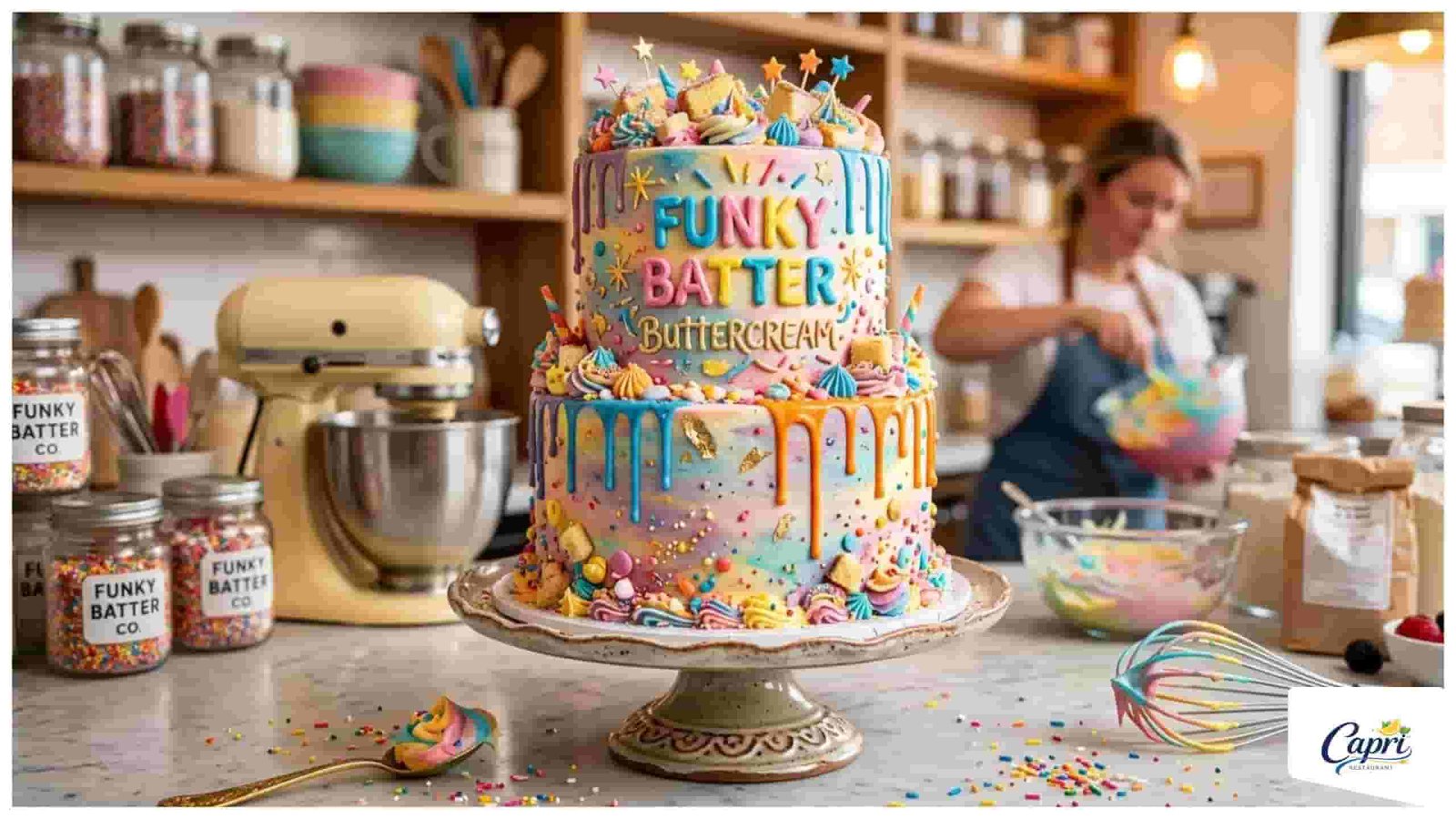

Funky Batter Buttercream Recipe
Ingredients
Equipment
Method
- Step 1 — Whip the butter until pale and fluffy. Place the room-temperature butter into your completely clean mixing bowl and begin beating on medium-high speed using the paddle attachment. Set a timer for 7 full minutes and do not rush this step — it is the single most important technique in the entire recipe. During these minutes, the butter will go through several stages: first it will look creamy and yellow, then it will turn a noticeably lighter, almost ivory color, and finally it will look nearly white and almost doubled in volume, with a texture closer to whipped cream than butter. Pause to scrape down the bowl and paddle every 2 minutes so every bit of butter gets equal time against the beaters. This extended whipping is what creates the light, airy texture that distinguishes a professional-quality buttercream from a dense, heavy one — do not stop at 3 or 4 minutes even if it looks good, because the full 7 minutes builds a fat structure that holds up under the weight of the sugar.
- Step 2 — Add the sifted powdered sugar gradually. Reduce the mixer speed to its lowest setting — this is important, because adding sugar at high speed turns your kitchen into a snowstorm. Drape a clean kitchen towel loosely over the bowl to contain any sugar that puffs up. Add the sifted powdered sugar one cup at a time, allowing each addition to fully incorporate before adding the next — this takes about 20–30 seconds per cup. After each cup, stop the mixer and scrape down the bowl and paddle before continuing. The mixture will look very stiff and dry after all the sugar is in, which is completely normal — this changes completely in the next step. Never dump all the sugar in at once, as uneven distribution creates lumps that are difficult to remove and can leave you with a dense, heavy result.
- Step 3 — Add vanilla, salt, and liquid. With the mixer still on low speed, add the vanilla extract, the kosher salt, and one tablespoon of milk or heavy cream. Mix for about 60 seconds. You will see the buttercream immediately begin to soften and loosen as the liquid hydrates the sugar and carries the vanilla throughout the batch. At this point, assess the texture: if it looks thick and stiff, add a second tablespoon of liquid and mix for another 30 seconds. If it is still stiffer than you'd like for spreading or piping, add a third tablespoon. The ideal consistency coats the back of a spoon thickly and holds a peak when you lift the paddle, but drops off the spatula in a slow, smooth ribbon rather than breaking in chunks. Always add liquid conservatively — you can always add more, but thinning down an over-liquefied buttercream requires additional sugar, which changes the sweetness level.
- Step 4 — Final slow mix to remove air bubbles. Increase the mixer speed to medium for 10 seconds, then reduce to the lowest speed and mix for a final 60–90 seconds. This slow finish is a professional trick: the high-speed whipping in Step 1 incorporates a large amount of air into the butter, which is good for lightness but can leave visible air holes and a slightly rough surface when you spread the frosting. The low-speed finish knocks the larger bubbles out while keeping the overall light texture intact. If you want an ultra-smooth finish for a wedding cake or show-stopping layer cake, use a stiff spatula to beat the finished buttercream firmly against the side of the bowl for 2–3 minutes — this eliminates even the finest bubbles and produces a perfectly matte, glass-smooth surface. The buttercream is now ready to use immediately, or transfer to an airtight container for storage.
Video
Notes
- The 7-minute butter whip is non-negotiable: Every quality issue in this recipe — graininess, heaviness, poor color, inability to hold a piped shape — traces back to under-whipped butter. Set a timer. Walk away. Come back to pale, fluffy, nearly white butter and your buttercream will be magnificent.
- Butter temperature is everything: Genuinely soft means your finger presses in easily and leaves a clean indent without sliding through grease. If your butter has a shiny, greasy surface, it is too warm and the frosting will be too soft. If it resists pressing at all, it is too cold and will not whip evenly. The ideal temperature is 65–68°F (18–20°C). In a hurry, cut butter into cubes and microwave in 5-second bursts until just soft.
- Always sift your powdered sugar: Grainy buttercream is almost always caused by skipping this step. Even brands that seem fine have micro-lumps from settling during packaging. Sifting takes 60 seconds and is the difference between silky and sandy.
- How to know when it’s ready: The finished buttercream should be pale ivory or near-white in color, fluffy in appearance, and flow off the spatula in a slow, glossy ribbon. When you pipe a swirl onto a cupcake, the ridges should hold sharp and not slump. If swirls slump within 30 seconds, the frosting is too warm or too thin — refrigerate for 10–15 minutes and re-beat briefly before using.
- Most common mistake — adding too much liquid at once: One tablespoon too many and the buttercream goes from pipeable to pourable almost immediately. There is no quick fix — you must add more powdered sugar to compensate, which sweetens the batch. Always add liquid one tablespoon at a time, mix for 30 seconds, then assess before adding more.
- Variation — Funfetti cake batter: After the buttercream is fully made, fold in ¼ cup of rainbow jimmies sprinkles (not nonpareils — they bleed color) with a spatula. Do not use the mixer at this stage, as it will break down the sprinkles and turn the whole batch grey-green.
- Variation — Chocolate cake batter buttercream: Sift 3–4 tablespoons of high-quality Dutch-process cocoa powder in with the powdered sugar. Cocoa absorbs liquid, so you may need an extra tablespoon of cream to reach the right consistency. The result tastes like brownie batter in frosting form.
- Variation — Lemon cake batter: Replace the vanilla extract with 1½ teaspoons of pure lemon extract and add 1 tablespoon of fresh lemon zest. Use heavy cream rather than milk for the liquid. This version is exceptional on lemon cake, blueberry cupcakes, or any spring or summer dessert.
- Variation — Cream cheese cake batter: Replace half the unsalted butter (½ cup / 113g) with an equal weight of full-fat block cream cheese, softened to the same temperature as the butter. Beat the butter and cream cheese together for 5 minutes before adding sugar. The result is tangier, slightly denser, and especially good on carrot cake or red velvet.
- Make-ahead instructions: This buttercream can be made up to 5 days ahead. Transfer to an airtight container, press a piece of plastic wrap directly onto the surface to prevent a crust from forming, and refrigerate. When ready to use, bring to room temperature for 30–45 minutes, then re-beat in the mixer for 3–5 minutes on medium-high until fully fluffy and spreadable again.
- Storage: Room temperature in a covered container: up to 1 day. Refrigerator in an airtight container: up to 1 week. Always press plastic wrap directly against the surface before sealing to prevent crusting and odor absorption.
- Freezing: Transfer to a freezer-safe bag or airtight container and freeze for up to 3 months. Thaw overnight in the refrigerator, then bring to room temperature and re-whip in the mixer before using. The texture recovers completely after re-whipping.
- Decorating note — color: Use gel food coloring only, never liquid. Liquid food coloring adds water to the frosting, which can thin it unpredictably. Add gel one toothpick-tip at a time, mix thoroughly, and assess before adding more — colors deepen slightly as the frosting sits.
- Scaling note: This batch frosts 12–16 cupcakes with a generous piped swirl, or fills and covers one 8-inch double-layer cake. For a three-layer cake or a large sheet cake, make 1.5x the recipe. The recipe doubles cleanly — just be sure to whip the butter for the full 7 minutes regardless of batch size.
What is Funky Batter Buttercream?
The Dish at a Glance
Funky Batter Buttercream is a cake-batter-flavored American buttercream frosting that takes the classic base of butter and powdered sugar and elevates it through two things: technique and flavoring. The technique — specifically whipping the butter alone for a full 7 minutes before any sugar is added — transforms what would otherwise be a dense, heavy frosting into something noticeably lighter, more aerated, and more similar in texture to what you’d find piped onto a cupcake at a premium bakery than to anything that comes out of a store-bought tub.
The flavoring is built around pure vanilla extract, which, in the right quantity and at the right ratio to butter and sugar, produces what bakers have long recognized as the characteristic “cake batter” taste — that warm, sweet, slightly eggy vanilla richness that triggers memories of licking the bowl after mixing a birthday cake. The name Funky Batter references a popular boutique bakery brand known for its cake-batter products, and this recipe is a homemade interpretation of their signature frosting style.
How It Differs From Standard Buttercream
Most home bakers are familiar with a simple two-ingredient buttercream: butter beaten with powdered sugar, finished with a splash of milk. The result is edible and workable, but it has a dense, sometimes slightly greasy texture and an unbalanced sweetness that comes from the sugar being the dominant note rather than the butter. Funky Batter Buttercream solves this through extended whipping time. Seven minutes of high-speed beating introduces significant air into the butter’s fat structure, breaking down the fat crystals into smaller, more evenly distributed particles that hold air more effectively — producing a frosting that is measurably lighter, more matte in appearance, and longer-lasting in its shape once piped.
The small addition of salt — just ¼ teaspoon — plays an outsized role in the flavor. Salt suppresses bitterness and balances sweetness in any food preparation, and in a frosting made primarily of sugar, it is the difference between one-dimensional sweetness and a more nuanced, rounded flavor that makes people want a second cupcake.
What “Cake Batter Flavor” Actually Means
The phrase “cake batter flavor” in frosting refers to a specific combination: high-quality vanilla extract, butter fat, and sugar at a ratio that mimics the raw mixture you’d taste if you dipped a finger into a mixing bowl of yellow cake batter. It’s vanilla with more body than vanilla alone — the butter adds richness, and the sugar adds sweetness in a way that feels raw and celebratory rather than cooked and refined. The slight saltiness of well-made cake batter is replicated by the kosher salt in this recipe. When all of these elements are in balance, the frosting tastes unmistakably, nostalgically like a birthday cake is about to happen.
BENEFITS
1. It Produces Professional Results Without Professional Equipment
The technique that makes this buttercream exceptional — extended butter whipping — requires nothing more than a hand mixer or a stand mixer, both of which are standard kitchen tools. There is no double boiler, no candy thermometer, no Swiss meringue or Italian meringue process, and no risk of scrambling eggs as with more complex buttercream styles. The result looks and tastes like bakery-quality frosting, but the process is straightforward enough for a first-time baker to execute successfully.
2. It Is Significantly More Economical Than Store-Bought Premium Frosting
A single batch of Funky Batter Buttercream costs between $4 and $7 in ingredients and produces enough frosting for 12–16 generously swirled cupcakes. Comparable premium bakery-style frostings sold in tubs or at specialty cake shops cost between $8–$15 per 12 oz — enough for approximately 6–8 cupcakes at a thin application. Making your own cuts the cost roughly in half while delivering a superior, fresher, fully customizable result.
3. You Control Every Ingredient
Store-bought frostings contain stabilizers, preservatives, artificial flavors, hydrogenated oils, and high-fructose corn syrup — ingredients included to extend shelf life and reduce production cost, not to improve flavor or texture. This recipe contains five ingredients, all of which you can recognize and pronounce. If you are baking for someone with dietary restrictions or sensitivities, you know exactly what is in every spoonful.
4. It Is Enormously Versatile
This buttercream adapts in virtually every direction without losing its fundamental character. Change the extract and you change the flavor entirely. Add cocoa for chocolate. Add food coloring for any color scheme. Fold in sprinkles for funfetti. Swap half the butter for cream cheese for a tangier, more complex base. The recipe functions as a foundation rather than a finished formula, making it the most useful single frosting recipe a home baker can master.
5. It Is Stable Enough for Extended Use
Unlike whipped cream frostings that deflate within hours, or cream cheese frostings that weep and separate at room temperature, this buttercream is genuinely stable. A frosted cake or cupcake can sit at a reasonably cool room temperature (below 72°F / 22°C) for up to a day without visible deterioration. Piped decorations hold their shape, swirls stay defined, and smooth finishes remain smooth. For bakers who need to frost and transport, or who bake ahead for parties and events, this stability is a real practical benefit.
6. It Freezes and Stores Exceptionally Well
The buttercream freezes for up to 3 months and refrigerates for up to a week, recovering completely to its original texture after re-whipping. This means you can make a large batch, portion it into labeled bags, and pull exactly as much as you need for any future project. For regular bakers who make cupcakes or cakes frequently, this represents significant time savings — the longest part of the process only needs to happen once every few weeks.
BEST COMBINATIONS
Cake Pairings
The right frosting-to-cake pairing is a matter of both flavor harmony and structural compatibility. Funky Batter Buttercream is light enough not to overwhelm delicate cakes and stable enough to support denser ones.
- Classic Yellow Birthday Cake: The definitive pairing. Yellow butter cake and cake-batter buttercream are built from the same flavor notes — vanilla, butter, sugar — and when layered together, they create an experience that is exactly what most people mean when they say “birthday cake.” This is the combination the frosting was designed for.
- Funfetti or Confetti Cake: Sprinkle-studded vanilla cake and sprinkle-folded Funky Batter Buttercream is an unapologetically celebratory combination. The visual cheerfulness matches the playful, nostalgic flavor on both sides.
- Chocolate Cake: The vanilla-forward buttercream creates a classic chocolate-vanilla contrast that is arguably the most universally beloved cake combination in American baking. Use the standard vanilla version of the frosting for maximum contrast, or the chocolate cake batter variation for a fully chocolate experience.
- Carrot Cake: Use the cream cheese variation of this buttercream — replacing half the butter with cream cheese — and it becomes one of the best possible frostings for carrot cake: sweet, slightly tangy, and rich without being as heavy as a full cream cheese frosting.
- Lemon Cake: The lemon variation of this buttercream (lemon extract plus fresh zest) pairs brilliantly with a bright, tart lemon cake. The butter rounds out the tartness, and the sugar adds sweetness in the right proportion to keep the lemon as the primary flavor.
- Red Velvet Cake: Use the cream cheese variation here, too. Red velvet’s mild cocoa flavor and the subtle tang of the cream cheese buttercream is a classic American pairing that works for any occasion, from Valentine’s Day to Christmas.
Cupcake Applications
- Vanilla bean cupcakes with a standard swirl: Pipe a tall rosette using a 1M tip, finish with a single sprinkle or edible pearl in the center. Clean, elegant, and appropriate for everything from a child’s birthday to a bridal shower.
- Chocolate cupcakes with the chocolate batter variation: Use a 6B open star tip for a more textured, rustic swirl. Finish with a chocolate shaving or a mini Oreo.
- Strawberry cupcakes with a pink-tinted version: Add 2–3 drops of pink gel food coloring to the standard recipe and a ¼ teaspoon of strawberry extract alongside the vanilla. Pipe tall and finish with a freeze-dried strawberry piece.
Cookie and Bar Applications
- Sugar Cookie Sandwich Filling: Spread a generous layer of buttercream between two classic sugar cookies and press gently. The frosting acts as an edible glue and contributes flavor that the cookies themselves can’t provide. Roll the exposed edge in rainbow sprinkles for a bakery-style finish.
- Blondie Topping: Spread a thin layer of Funky Batter Buttercream over a cooled pan of blondies before slicing. The butterscotch-vanilla notes of the blondie and the cake-batter notes of the frosting are remarkably complementary.
- Brownie Frosting: Use the chocolate cake batter variation spread over a pan of fudgy brownies. This combination is dense, rich, and completely over-the-top in the best possible way — appropriate for when restraint is explicitly not the goal.
Occasion Pairings
- Birthday parties: The definitive occasion for this frosting. Tint multiple batches in different colors, fill multiple piping bags, and offer a cupcake decorating station for children or guests.
- Baby showers and gender reveal parties: Tint the buttercream pink, blue, or a combination, and use it to frost a reveal cake or coordinated cupcakes. The light, airy texture holds color beautifully.
- Holiday baking: Use red and green gel coloring for Christmas cookies, orange for Halloween cupcakes, or pastel shades for Easter. The neutral base flavor adapts to any seasonal context without clashing.
- Everyday baking: Because the recipe is so quick — under 20 minutes from cold ingredients to finished frosting — it is practical enough to make on a weeknight for school lunches, after-school treats, or a spontaneous dessert.
FAQs
Graininess almost always comes from one of two causes: powdered sugar that wasn’t sifted before adding, or sugar that was added before the butter was whipped long enough. Sifting breaks up any micro-lumps in the sugar that form during packaging and storage — even sugar that looks smooth to the eye can have lumps that produce a sandy texture in the finished frosting. If your buttercream is already made and still grainy, continue beating on medium-high speed for an additional 3–5 minutes. In many cases, extended mixing will break down the remaining sugar particles and smooth the texture significantly.
Curdling in buttercream is almost always a temperature problem. If the butter was slightly too cold when you started, the fat and the air don’t emulsify properly, and the mixture looks broken and lumpy. The fix is heat: hold a warm, damp towel against the outside of the mixing bowl for 30–60 seconds to gently raise the temperature, then continue beating. Conversely, if the buttercream looks soupy or very greasy, the butter was too warm — transfer the whole bowl to the refrigerator for 10–15 minutes, then beat again. Both problems fix themselves with the right temperature adjustment.
Technically, yes, but the result will be noticeably different. A sturdy wooden spoon and significant elbow grease can cream butter and sugar together, but you will not achieve the 7-minute whipped texture that makes this buttercream special. The frosting will be denser, more opaque, and less airy. If you have no mixer at all, this recipe is still workable — just temper your expectations for the texture and plan to use it for spreading rather than piping.
Add liquid — whole milk or heavy cream — one teaspoon at a time (not tablespoon — teaspoon at this stage), mixing for 20–30 seconds after each addition. The texture changes quickly once the right amount of liquid is incorporated, so patience and small additions are key. If the room is cold and the butter has firmed up during mixing, that can also cause a thicker-than-expected consistency — letting the bowl sit at room temperature for 5 minutes before adjusting with liquid often solves the problem without any addition at all.
Q: How do I fix buttercream that’s too runny? Add sifted powdered sugar, one tablespoon at a time, mixing briefly after each addition. Be aware that adding sugar also adds sweetness, so if the frosting is already at the right sweetness level, adding too much sugar to fix the consistency will make it too sweet. An alternative fix is to refrigerate the frosting for 15–20 minutes until the butter firms slightly, then re-beat — this often restores the right consistency without any additional ingredients.
Yes — omit the ¼ teaspoon of kosher salt from the recipe if you do. Salted butter works perfectly well in buttercream and some bakers actually prefer it for the slightly more complex, less one-dimensionally sweet flavor it produces. The only risk is inconsistency — different brands of salted butter contain varying amounts of salt, so the final flavor may vary batch to batch. Unsalted butter gives you more control.
A frosted cake or cupcakes can be prepared up to 24 hours in advance and stored covered at cool room temperature (below 70°F / 21°C). For longer make-ahead timelines, frost and refrigerate — up to 3 days — and bring to room temperature for 30 minutes before serving. Cold buttercream fresh from the refrigerator is firm and slightly waxy; it needs time to soften before it reaches the ideal eating texture.
Yes, and it colors beautifully because the pale ivory base is essentially a blank canvas. Always use gel food coloring, never liquid. Liquid food coloring is water-based, and adding water to buttercream disrupts the emulsion and can make it soft and difficult to pipe. Gel coloring is concentrated and a tiny amount produces vibrant color with no structural impact on the frosting. Add one toothpick-tip of gel at a time, mix thoroughly, then assess the color — it deepens slightly as the frosting sits, so don’t over-add in the first round.
American buttercream softens and eventually melts in heat above 75°F / 24°C because its structure relies entirely on the fat in the butter remaining solid. For outdoor summer events, keep frosted items in a cool space until the last possible moment, and avoid direct sunlight. If heat is unavoidable, substitute 2–3 tablespoons of the butter with solid vegetable shortening — it has a higher melting point than butter and significantly improves heat stability, at the cost of a slightly less rich flavor.
Yes. Replace the unsalted butter with a high-quality plant-based block butter (not spread — the higher water content in spreads makes the frosting too soft). Brands like Miyoko’s or Earth Balance Buttery Sticks perform best. Replace the milk or cream with oat milk or full-fat coconut cream. The texture will be very similar to the dairy version, though the flavor will be slightly different depending on the plant-based butter brand you use.