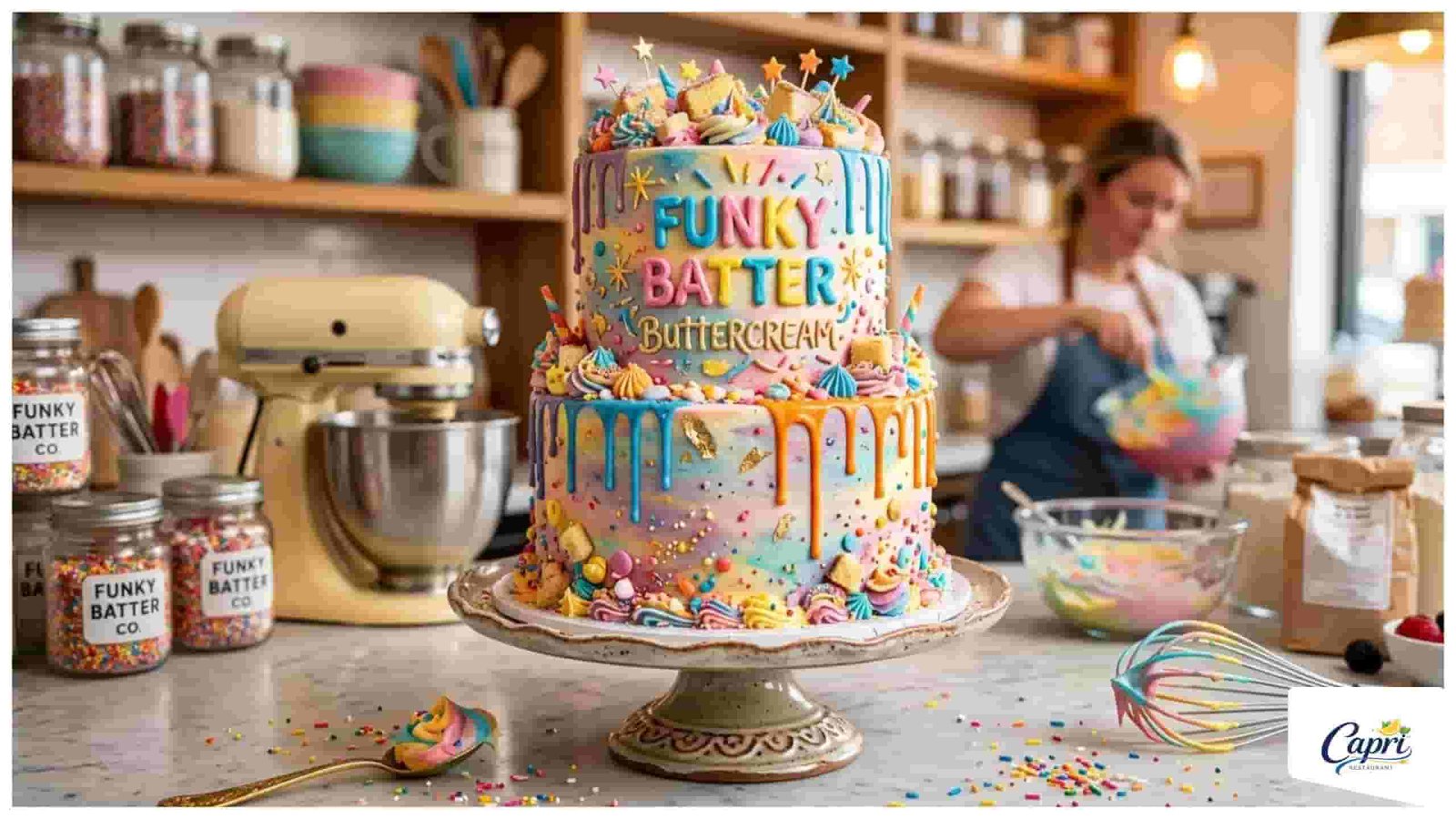

Ingredients
Equipment
Method
WHIP THE BUTTER
- Step 1 — Whip the butter until pale and fluffy. Place the room-temperature butter into your completely clean mixing bowl and begin beating on medium-high speed using the paddle attachment. Set a timer for 7 full minutes and do not rush this step — it is the single most important technique in the entire recipe. During these minutes, the butter will go through several stages: first it will look creamy and yellow, then it will turn a noticeably lighter, almost ivory color, and finally it will look nearly white and almost doubled in volume, with a texture closer to whipped cream than butter. Pause to scrape down the bowl and paddle every 2 minutes so every bit of butter gets equal time against the beaters. This extended whipping is what creates the light, airy texture that distinguishes a professional-quality buttercream from a dense, heavy one — do not stop at 3 or 4 minutes even if it looks good, because the full 7 minutes builds a fat structure that holds up under the weight of the sugar.
ADD THE SUGAR
- Step 2 — Add the sifted powdered sugar gradually. Reduce the mixer speed to its lowest setting — this is important, because adding sugar at high speed turns your kitchen into a snowstorm. Drape a clean kitchen towel loosely over the bowl to contain any sugar that puffs up. Add the sifted powdered sugar one cup at a time, allowing each addition to fully incorporate before adding the next — this takes about 20–30 seconds per cup. After each cup, stop the mixer and scrape down the bowl and paddle before continuing. The mixture will look very stiff and dry after all the sugar is in, which is completely normal — this changes completely in the next step. Never dump all the sugar in at once, as uneven distribution creates lumps that are difficult to remove and can leave you with a dense, heavy result.
FLAVOR AND CONSISTENCY
- Step 3 — Add vanilla, salt, and liquid. With the mixer still on low speed, add the vanilla extract, the kosher salt, and one tablespoon of milk or heavy cream. Mix for about 60 seconds. You will see the buttercream immediately begin to soften and loosen as the liquid hydrates the sugar and carries the vanilla throughout the batch. At this point, assess the texture: if it looks thick and stiff, add a second tablespoon of liquid and mix for another 30 seconds. If it is still stiffer than you'd like for spreading or piping, add a third tablespoon. The ideal consistency coats the back of a spoon thickly and holds a peak when you lift the paddle, but drops off the spatula in a slow, smooth ribbon rather than breaking in chunks. Always add liquid conservatively — you can always add more, but thinning down an over-liquefied buttercream requires additional sugar, which changes the sweetness level.
FINISH AND DE-BUBBLE
- Step 4 — Final slow mix to remove air bubbles. Increase the mixer speed to medium for 10 seconds, then reduce to the lowest speed and mix for a final 60–90 seconds. This slow finish is a professional trick: the high-speed whipping in Step 1 incorporates a large amount of air into the butter, which is good for lightness but can leave visible air holes and a slightly rough surface when you spread the frosting. The low-speed finish knocks the larger bubbles out while keeping the overall light texture intact. If you want an ultra-smooth finish for a wedding cake or show-stopping layer cake, use a stiff spatula to beat the finished buttercream firmly against the side of the bowl for 2–3 minutes — this eliminates even the finest bubbles and produces a perfectly matte, glass-smooth surface. The buttercream is now ready to use immediately, or transfer to an airtight container for storage.
Video
Notes
- The 7-minute butter whip is non-negotiable: Every quality issue in this recipe — graininess, heaviness, poor color, inability to hold a piped shape — traces back to under-whipped butter. Set a timer. Walk away. Come back to pale, fluffy, nearly white butter and your buttercream will be magnificent.
- Butter temperature is everything: Genuinely soft means your finger presses in easily and leaves a clean indent without sliding through grease. If your butter has a shiny, greasy surface, it is too warm and the frosting will be too soft. If it resists pressing at all, it is too cold and will not whip evenly. The ideal temperature is 65–68°F (18–20°C). In a hurry, cut butter into cubes and microwave in 5-second bursts until just soft.
- Always sift your powdered sugar: Grainy buttercream is almost always caused by skipping this step. Even brands that seem fine have micro-lumps from settling during packaging. Sifting takes 60 seconds and is the difference between silky and sandy.
- How to know when it's ready: The finished buttercream should be pale ivory or near-white in color, fluffy in appearance, and flow off the spatula in a slow, glossy ribbon. When you pipe a swirl onto a cupcake, the ridges should hold sharp and not slump. If swirls slump within 30 seconds, the frosting is too warm or too thin — refrigerate for 10–15 minutes and re-beat briefly before using.
- Most common mistake — adding too much liquid at once: One tablespoon too many and the buttercream goes from pipeable to pourable almost immediately. There is no quick fix — you must add more powdered sugar to compensate, which sweetens the batch. Always add liquid one tablespoon at a time, mix for 30 seconds, then assess before adding more.
- Variation — Funfetti cake batter: After the buttercream is fully made, fold in ¼ cup of rainbow jimmies sprinkles (not nonpareils — they bleed color) with a spatula. Do not use the mixer at this stage, as it will break down the sprinkles and turn the whole batch grey-green.
- Variation — Chocolate cake batter buttercream: Sift 3–4 tablespoons of high-quality Dutch-process cocoa powder in with the powdered sugar. Cocoa absorbs liquid, so you may need an extra tablespoon of cream to reach the right consistency. The result tastes like brownie batter in frosting form.
- Variation — Lemon cake batter: Replace the vanilla extract with 1½ teaspoons of pure lemon extract and add 1 tablespoon of fresh lemon zest. Use heavy cream rather than milk for the liquid. This version is exceptional on lemon cake, blueberry cupcakes, or any spring or summer dessert.
- Variation — Cream cheese cake batter: Replace half the unsalted butter (½ cup / 113g) with an equal weight of full-fat block cream cheese, softened to the same temperature as the butter. Beat the butter and cream cheese together for 5 minutes before adding sugar. The result is tangier, slightly denser, and especially good on carrot cake or red velvet.
- Make-ahead instructions: This buttercream can be made up to 5 days ahead. Transfer to an airtight container, press a piece of plastic wrap directly onto the surface to prevent a crust from forming, and refrigerate. When ready to use, bring to room temperature for 30–45 minutes, then re-beat in the mixer for 3–5 minutes on medium-high until fully fluffy and spreadable again.
- Storage: Room temperature in a covered container: up to 1 day. Refrigerator in an airtight container: up to 1 week. Always press plastic wrap directly against the surface before sealing to prevent crusting and odor absorption.
- Freezing: Transfer to a freezer-safe bag or airtight container and freeze for up to 3 months. Thaw overnight in the refrigerator, then bring to room temperature and re-whip in the mixer before using. The texture recovers completely after re-whipping.
- Decorating note — color: Use gel food coloring only, never liquid. Liquid food coloring adds water to the frosting, which can thin it unpredictably. Add gel one toothpick-tip at a time, mix thoroughly, and assess before adding more — colors deepen slightly as the frosting sits.
- Scaling note: This batch frosts 12–16 cupcakes with a generous piped swirl, or fills and covers one 8-inch double-layer cake. For a three-layer cake or a large sheet cake, make 1.5x the recipe. The recipe doubles cleanly — just be sure to whip the butter for the full 7 minutes regardless of batch size.