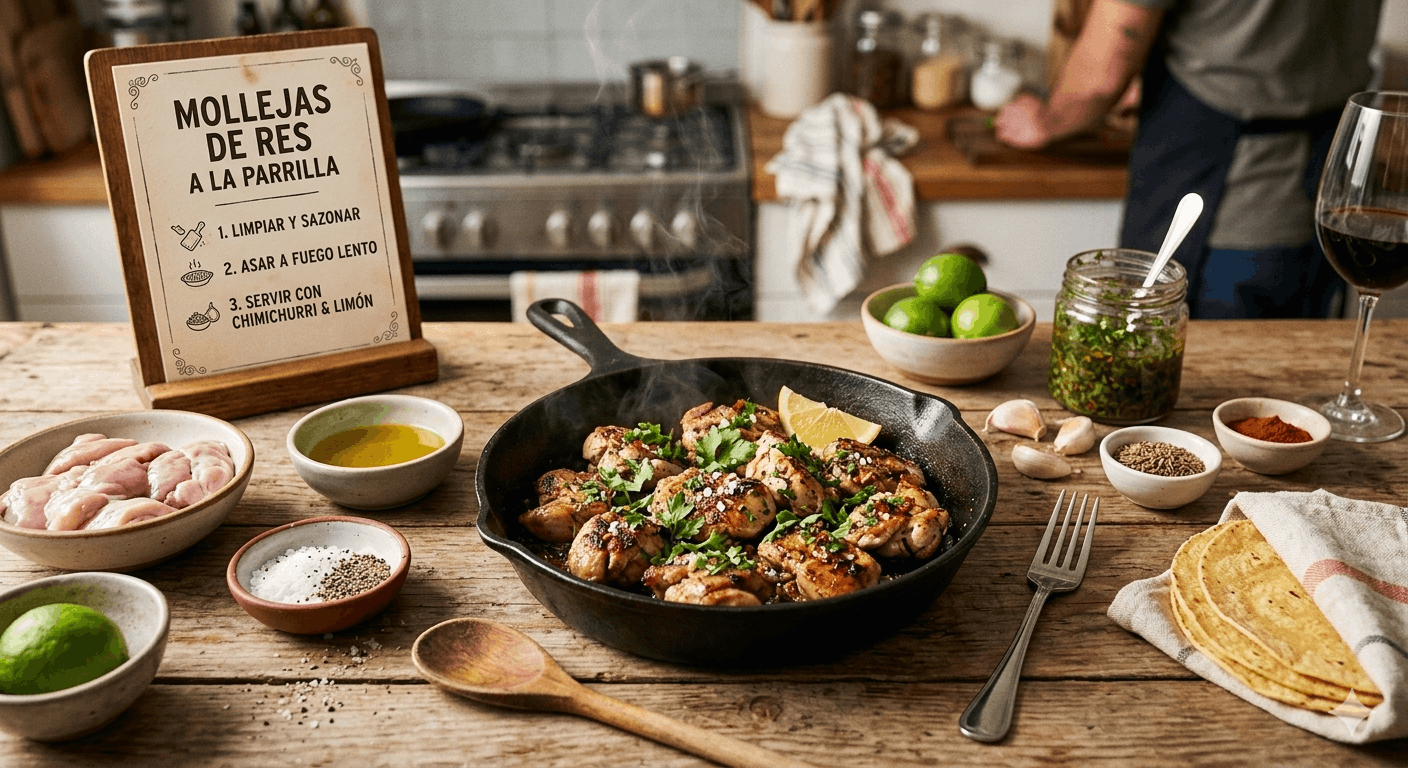

Ingredients
Equipment
Method
PREPARE THE SWEETBREADS
- Step 1 — Soak to purify. Place the raw sweetbreads in a large bowl and cover completely with cold water. Add the tablespoon of white vinegar to the water, stir gently, and allow the sweetbreads to soak for a minimum of 1 hour — up to 2 hours for a noticeably cleaner, milder result. During this time the water will become tinged with a pale pink color as residual blood and impurities draw out. If the water turns deeply red, drain it, rinse the sweetbreads briefly under cold running water, and refill with fresh cold water to continue soaking. This soaking step is not optional — it is the single preparation step most responsible for the clean, mild, butter-like flavor that makes properly prepared sweetbreads so appealing. Sweetbreads that have not been soaked taste noticeably stronger and less refined.
- Step 2 — Parboil to firm and set the texture. Transfer the soaked sweetbreads to a medium saucepan and cover with fresh cold water. Add the teaspoon of salt. Bring to a gentle boil over medium heat, then reduce the heat to a low simmer and cook for 8 to 10 minutes. You are looking for the sweetbreads to turn from their raw, pale-beige translucent appearance to a fully opaque white, and to firm up slightly when pressed — they should feel like a dense, set custard rather than raw and yielding. Do not allow the water to boil aggressively, as vigorous boiling toughens the exterior. A gentle, barely moving simmer is what you want throughout.
- Step 3 — Shock, peel, and clean. The moment the sweetbreads are parboiled, remove them from the hot water and immediately transfer them to a bowl of cold water — add ice if available. The cold shock stops the cooking instantly and firms the outer membrane, making it much easier to peel. Allow them to sit in the cold water for 5 minutes. Then, working piece by piece over the cutting board, use your fingers and the tip of a sharp paring knife to peel away the thin, translucent outer membrane that covers each piece. It comes off in sheets and strips — work patiently and remove as much as possible. Also trim away any visible pieces of fat, gristle, or tough connective tissue (these appear as white, rubbery cords or fibrous sections). The interior should be smooth, soft, and uniform once cleaned.
- Step 4 — Cut into pieces and dry thoroughly. Cut the cleaned sweetbreads into bite-sized pieces — roughly 1 to 1½ inches. If any piece is particularly thick, slice it in half horizontally so all pieces cook evenly. Transfer the cut pieces to a plate lined with paper towels and press additional paper towels firmly on top. Pat them as dry as possible and allow them to air-dry for 5 additional minutes. This is critical: any surface moisture on the sweetbreads when they hit the hot pan will cause immediate steaming rather than searing, and steamed sweetbreads will never achieve the caramelized, crispy crust that defines a well-made molleja.
COOK THE MOLLEJAS
- Step 5 — Heat the pan and build the garlic basePlace your cast-iron skillet or heavy pan over medium-high heat and allow it to get fully, genuinely hot before adding any fat — this takes 2 to 3 minutes. Add the oil, lard, or butter and heat until it shimmers and moves easily across the pan surface. Reduce the heat slightly to medium and add the minced garlic, sautéing for about 30 seconds, just until it becomes fragrant and the raw garlic smell softens. Do not allow the garlic to brown at this stage — browned garlic before the meat goes in will turn bitter under the extended heat of the sweetbread cooking.
- Step 6 — Sear to a deep golden crustAdd the dried sweetbread pieces to the pan in a single layer — do not overcrowd. If your pan is not large enough to fit everything in a single layer with space between each piece, cook in two batches. Overcrowding causes the sweetbreads to steam rather than sear, and you will never develop the crust. Once in the pan, leave them completely undisturbed for 3 to 4 minutes — resist the urge to move them. This initial undisturbed contact with the hot surface is what builds the deep, caramelized, golden-brown crust that makes the dish. After 3 to 4 minutes, use tongs to turn each piece onto a new face. Continue cooking, turning occasionally, for a total of 10 to 15 minutes until all sides have developed an even, deep golden-brown crust that is crispy to the touch. The interior should still feel slightly yielding when you press a piece gently — if it feels completely firm throughout, it is approaching overcooked.
- Step 7 — Season and finish with citrus. Season the cooked sweetbreads with salt and freshly ground black pepper directly in the pan, tossing gently to coat. Remove the pan from the heat and squeeze the fresh lime or lemon juice over the entire batch. The citrus will sizzle and steam immediately against the hot pan — this is what you want. The acid cuts through the rich, buttery fat of the sweetbreads and lifts the whole dish into brightness. Serve immediately — mollejas are best within 5 minutes of finishing, while the crust is at its most crisp and the interior is still soft and warm.
- Step 8 — Assemble the tacos (if serving as tacos). Warm the corn tortillas two at a time directly over a gas flame or in a dry skillet until they are pliable, spotted with char in places, and fragrant. Double-stack them — two tortillas per taco. Spoon a generous portion of the hot sweetbreads into the center of each pair. Top with a small pile of finely diced white onion, a generous handful of chopped fresh cilantro, and a squeeze of lime. Add salsa to taste. Eat immediately — do not let the taco sit or the tortillas will soften and the sweetbread crust will lose its crispiness.
Video
Notes
- Soaking is the preparation step that separates good mollejas from great ones: A minimum of 1 hour in cold water with a splash of vinegar draws out the residual blood that gives unseasoned sweetbreads a stronger, more metallic flavor. If you have time for a 2-hour soak with one water change at the halfway mark, the result is noticeably cleaner and more delicate. Some traditional cooks soak overnight in the refrigerator for the mildest possible result.
- Dryness before frying is everything: Any surface moisture on the sweetbreads when they enter the hot pan immediately creates steam, which prevents the Maillard reaction (the chemical process that produces the golden-brown crust) from occurring. Pat them with paper towels, then allow them to air-dry for an additional 5 minutes. The dryer the surface, the more dramatic and even the crust.
- Cast-iron is the best pan for this recipe: The consistent, even heat retention of cast iron produces the most uniform browning across all faces of the sweetbreads. Stainless steel is a good second choice. Non-stick pans can work but produce a less developed crust because they cannot reach and maintain the same surface temperatures.
- How to know when they are perfectly cooked: The outside should be a deep, even golden-brown — darker than pale tan, lighter than burnt mahogany. When you press a piece gently with your fingertip, there should be slight give — the interior is still soft and warm. A completely firm piece is overcooked and the creamy interior will have dried out.
- Most common mistake — overcrowding the pan: If the pieces are touching each other, they trap steam and will steam rather than sear. The result is grey, soft, and unappetizing rather than golden and crispy. Cook in batches without any hesitation — the second batch is worth the wait.
- Variation — Argentine asado style: Instead of pan-frying, place the cleaned and dried (but not cut) sweetbreads directly on a charcoal or wood grill over medium heat. Cook low and slow for 20 to 30 minutes, turning occasionally, until the exterior is deeply charred and crispy on all sides and the interior is fully heated through. Season with nothing but coarse salt and serve with homemade chimichurri. This is the purist preparation and many consider it the finest way to eat mollejas.
- Variation — Butter-basted French style: Replace the oil with 3 tablespoons of unsalted butter. Once the sweetbreads are golden on the first side, tilt the pan and continuously baste them with the foaming butter using a spoon for the remainder of the cooking time. Finish with a squeeze of lemon, chopped fresh parsley, and serve with mashed potatoes. This is the classic French preparation (ris de veau) adapted for beef sweetbreads.
- Variation — Spiced Mexican street style: Add ½ teaspoon of ground cumin and a pinch of dried Mexican oregano to the pan along with the garlic. After the sweetbreads are cooked and plated, dust lightly with mild chili powder and finish with lime juice. This version leans into the taco-street-food identity and is outstanding with salsa verde.
- Sourcing tip: Beef sweetbreads are not typically stocked in mainstream supermarkets. Your best sources are: a Latin American butcher or carnicería (call ahead — they may need a day's notice to set them aside), a halal butcher (which frequently stocks offal), or a full-service specialty butcher. Online butchers such as D'Artagnan also ship frozen sweetbreads nationally. Buy them fresh if possible and use within 1 day of purchase.
- Storage: Raw sweetbreads are highly perishable and should be cooked on the day of purchase, or within 24 hours maximum, stored in the coldest part of the refrigerator. Cooked sweetbreads can be stored in an airtight container in the refrigerator for up to 2 days. Reheat in a dry or lightly oiled skillet over medium heat to restore some of the exterior crispness — microwave reheating makes them rubbery.
- Freezing: Not recommended. Freezing and thawing significantly degrades the delicate texture of sweetbreads, producing a watery, mushy interior when cooked. Use fresh whenever possible.
- Scaling note: This recipe scales up linearly for a crowd. For 8 people, double all quantities and cook in batches — never double the quantity and try to cook it all at once, as the pan will be catastrophically overcrowded.