
Ingredients
Equipment
Method
Phase 1 — Prepare Your Glass and Espresso
- Step 1 — Chill the martini glassPlace your martini glass in the freezer or fill it with ice water while you prepare the cocktail. A chilled glass is non-negotiable — it keeps the drink cold longer and sharpens the contrast between the silky foam and the icy liquid below. A room-temperature glass will cause the cocktail to warm quickly and go flat, ruining the textural experience that makes this drink special. Let it sit for at least 5 minutes in the freezer, or 3 minutes with ice water, then empty and dry it right before pouring.
- Step 2 — Pull a fresh shot of espressoBrew one shot (approximately 1 oz / 30ml) of espresso using your espresso machine or Moka pot and let it sit for 2–3 minutes — you want it hot enough to still have active crema, but not so scorching that it immediately melts all your shaker ice on contact. The crema — that rusty-golden foam that sits on top of a freshly pulled shot — is the secret behind the beautiful foam layer on the finished cocktail. If you let the espresso go cold before shaking, the crema collapses and so does your foam. Don't skip this step.
Phase 2 — Build and Shake
- Step 3 — Fill the shaker with iceAdd enough ice to fill your cocktail shaker approximately halfway — this is typically 6–8 standard ice cubes. The ice needs to be fresh, hard, and not already melting; soft, watery ice dilutes the drink before shaking even begins and prevents the exterior of the shaker from frosting up properly. That frost on the outside of your shaker is your visual cue that the cocktail inside has reached the ideal serving temperature. Pack it in and move quickly.
- Step 4 — Add the vodka and coffee liqueurPour the 1½ oz of vodka into the shaker first, followed by 1 oz of coffee liqueur. Adding the spirits before the hot espresso helps pre-cool the shaker slightly so the contrast of the hot espresso hitting the cold ice is maximized — this thermal reaction is what activates the espresso's crema and generates foam. If you're using simple syrup, add it now as well, before the espresso goes in. Measure your pours carefully with a jigger; this isn't the moment to eyeball — precision is what separates a bar-quality martini from an unbalanced home pour.
- Step 5 — Add the hot espresso and shake hardAdd your fresh, hot espresso shot directly into the shaker. Immediately seal the lid tightly and shake as vigorously as you can for a full 15–20 seconds. You should hear the ice moving rapidly and feel the shaker become very cold and frost over on the outside — that's the sign the temperature inside has dropped fast enough. Don't be timid here: a weak shake produces thin, sad foam. A strong, confident shake produces that thick, caramel-colored foam layer that defines a great espresso martini. The key word is vigorous — this is your one technique moment that separates the result.
Phase 3 — Strain, Garnish, and Serve
- Step 6 — Strain into the chilled martini glassEmpty the ice water (if used) from your martini glass, hold your shaker over it, and pour briskly through your fine mesh strainer in one smooth, quick motion. Pouring quickly helps push the foam up and through the strainer cleanly — slow pouring leaves too much foam behind in the shaker. You should see a clean, dark espresso-vodka body with a defined layer of pale caramel foam sitting on top. If you see very little foam, scrape gently inside the shaker lid and pour that concentrated foam layer directly on top of the glass.
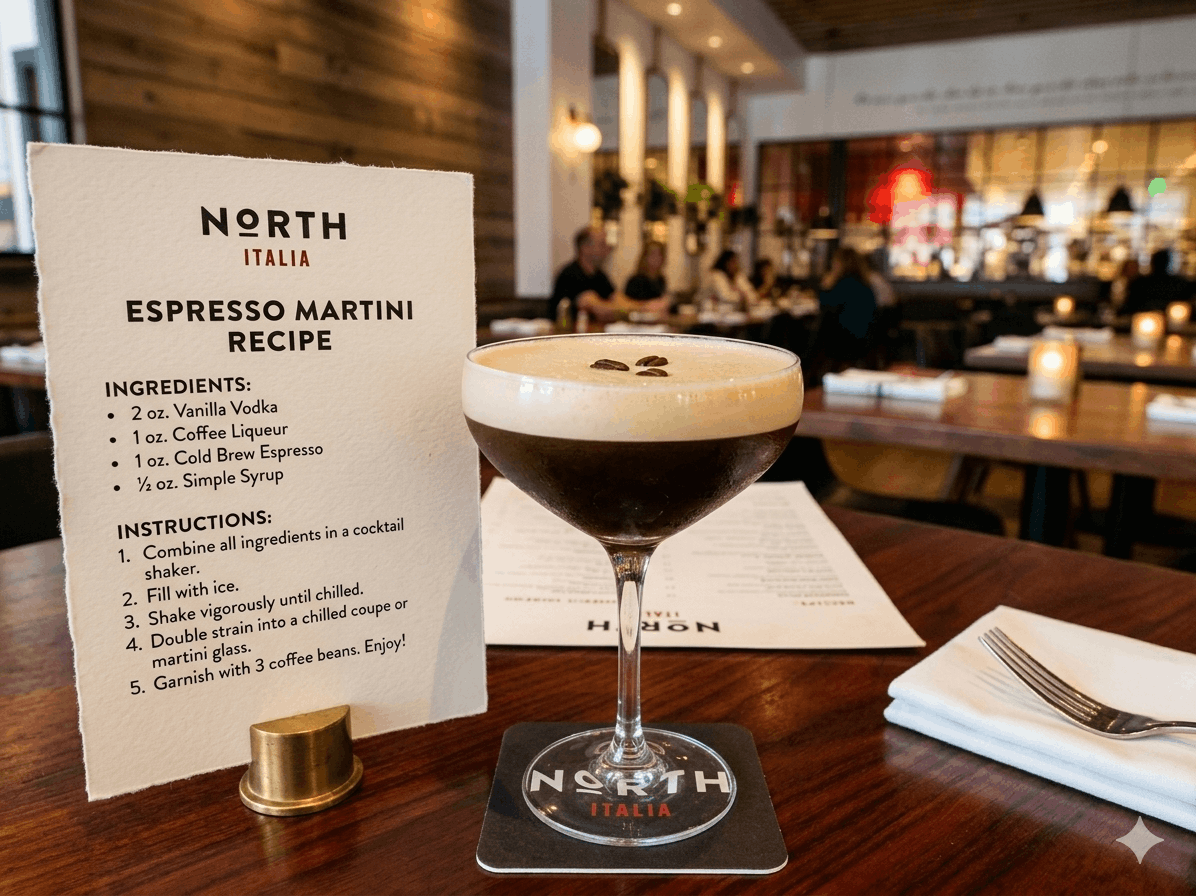
- Step 7 — Garnish and serve immediatelyPlace exactly three whole coffee beans in the center of the foam — this is the classic espresso martini garnish, representing health, wealth, and happiness. For an elevated Capri Restaurant–style finish, use a fine-mesh strainer to lightly dust a pinch of finely ground espresso over the foam surface. Serve immediately — the foam begins to settle within 2–3 minutes, and this cocktail is at its absolute best in the first minute after pouring, when the cold is sharpest and the foam is thickest.
Video
Notes
- The shake is everything: The single most important technique in this recipe is shaking hard and fast for a full 15–20 seconds. A vigorous shake does two things simultaneously — it chills the cocktail to near-freezing, and it emulsifies the espresso crema into that iconic foam layer. Under-shaking is the number one reason home espresso martinis look flat and disappointing.
- Use hot espresso, not cold: This seems counterintuitive when you're shaking over ice, but hot espresso has active, live crema — the same microscopic bubbles that create foam on your cappuccino. Cold or pre-brewed espresso has lost that crema, and no amount of shaking will recover it. Pull your shot, wait 2 minutes max, then shake.
- Choosing your coffee liqueur matters: Kahlúa is sweet, syrupy, and widely available — it's the crowd-pleasing classic. Mr. Black is drier, more intensely coffee-flavored, and preferred by coffee purists who don't want their cocktail to taste like dessert. Tia Maria sits between the two. If you use Mr. Black, add the optional simple syrup to compensate for the lack of sweetness.
- How to know it's done right: Your shaker exterior should be frosted white with condensation. When you pour, the cocktail should be a very dark brown — almost black — with a distinct pale caramel foam layer sitting clearly on top. The foam should hold its shape for at least 2–3 minutes. If it's brown all the way through with no foam separation, reshake harder next time.
- Common mistake — letting espresso go cold first: Many home cooks make espresso, wait too long, and add a lukewarm flat shot. The result? No foam, weaker flavor, and a thin drink. Keep an eye on timing — brew, wait 2–3 minutes maximum, then move immediately to the shaker.
- Flavor variations:
- Vanilla Espresso Martini: Replace plain vodka with vanilla vodka (e.g., Absolut Vanilla) and add a splash of vanilla simple syrup. Sweeter, more dessert-forward.
- Chocolate Espresso Martini: Add ½ oz dark chocolate liqueur (e.g., Godiva) or a drizzle of chocolate syrup in the shaker. Rich, mocha-style finish.
- Salted Caramel Espresso Martini: Swap simple syrup for salted caramel syrup and rim the glass with sea salt. The sweet-salty contrast with bitter espresso is remarkable.
- Baileys Espresso Martini: Add ½ oz Baileys Irish Cream for a creamy, velvety, dessert-style twist. Reduce simple syrup to avoid over-sweetening.
- Make-ahead for a party: Pre-mix the vodka, coffee liqueur, simple syrup, and a batch of espresso in a sealed jar or pitcher and refrigerate for up to 4 hours. When guests arrive, pour individual portions into a shaker with ice and shake to order. Never pre-shake — foam only happens fresh.
- Storage: This cocktail cannot be stored once made — it must be consumed immediately after shaking. The pre-mix (without ice) can be refrigerated for up to 4 hours. Do not store shaken cocktails.
- Reheating / Re-serving: Not applicable — this is a chilled cocktail served immediately. If a shaken cocktail has been sitting for more than 10 minutes, discard it and shake a fresh one. Flat, warm espresso martinis are not worth salvaging.
- Freezing: Not recommended. Alcohol and espresso do not freeze well for cocktail purposes, and the foam cannot survive freezing and thawing.
- Dietary adaptations:
- Vegan: The standard recipe is fully vegan — no dairy involved.
- Gluten-free: Naturally gluten-free; verify your specific liqueur brand's label to be certain.
- Low-sugar: Omit simple syrup and use Mr. Black liqueur (lower sugar than Kahlúa) for a drier, less sweet version.
- Caffeine-free: Use decaf espresso — the flavor is essentially identical, and you'll still get the foam.
- Non-alcoholic: Replace vodka with cold water or sparkling water, and coffee liqueur with Monin Coffee Syrup. Shake with espresso and serve the same way.
- Serving suggestions: At Capri Restaurant, the espresso martini shines after pasta, pizza, or grilled proteins — anything with richness that welcomes a sharp, cold, bitter counterpoint. Pair it with tiramisu, dark chocolate torte, or a cheese board. It's also exceptional as a pre-dinner aperitif for guests who need a little "wake-up" before a long evening.
- Scaling note: This recipe scales perfectly — simply multiply all liquid ingredients by the number of servings. Shake in 2-serving batches maximum to avoid overcrowding the shaker and losing foam quality. For 4+ guests, use a large shaker and shake in rounds rather than one giant batch.