Ingredients
Equipment
Method
COOK THE PASTA
- Step 1 — Boil pasta in aggressively salted water. Fill your large pot with cold water and set it over high heat. When it reaches a full rolling boil, add a generous amount of kosher salt — the water should taste pleasantly salty, not like the ocean, but unmistakably seasoned. This is one of the most important steps in the entire recipe: pasta cooked in well-salted water is seasoned from within and has a completely different, more developed flavor than pasta cooked in plain water. Add the 16 oz of rigatoni and cook according to the package instructions, checking for doneness about 1 to 2 minutes before the recommended time — you want al dente, meaning the pasta still has the faintest resistance when you bite through it, because it will finish cooking briefly in the hot sauce. Before draining, set a ladle or cup next to the pot now as a reminder — scoop out at least ¾ cup of the starchy pasta water and set it aside. Drain the rigatoni in a colander and toss lightly with a few drops of olive oil to prevent sticking while you finish the sauce.
BUILD THE SAUCE
- Step 2 — Soften the onion, shallots, and garlic slowlyWhile the pasta water heats, begin the sauce. Heat the olive oil in your large, deep skillet over medium heat. Add the diced yellow onion and shallots and immediately reduce the heat to medium-low. This slower cooking pace is important — you want the onion to soften completely and turn translucent and almost jammy, which takes 6 to 8 minutes, not the 2 to 3 minutes that a higher heat would suggest. Do not let them color or brown at this stage; the goal is sweetness through slow cooking, not caramelization. Stir frequently. When the onion is completely soft and translucent and you can see through it, add the minced garlic and stir for exactly 30 to 45 seconds — until you can smell it bloom fragrant and fresh. Pull the pan back from the heat immediately if the garlic starts to turn golden; burned garlic turns bitter and cannot be fixed.
- Step 3 — Cook down the tomato paste and chili pasteAdd the Calabrian chili paste and tomato paste directly to the softened onion base and stir vigorously to combine everything. Increase the heat back to medium. Cook this mixture for 2 full minutes, stirring constantly, pressing the paste against the bottom of the pan. The paste will begin to darken from bright red to a deeper brick-red color and will start to stick and sizzle slightly — this is the caramelization you want. This step is called "toasting" the tomato paste, and it transforms its flavor from raw and slightly sharp to deep, rounded, and intensely tomato. Do not skip or rush it; undercooked tomato paste is the most common reason homemade vodka sauce tastes flat and one-dimensional.
- Step 4 — Deglaze with vodka and release the fond. Pour the vodka directly into the hot pan. It will sizzle dramatically and steam. Use your wooden spoon to scrape up every brown, sticky bit from the bottom of the pan — this is the "fond," and it is concentrated flavor. Stir it into the liquid as it dissolves. Allow the vodka to cook for 2 to 3 minutes over medium heat, stirring occasionally, until the sharp alcohol smell has dissipated and the liquid has reduced slightly. You are not trying to eliminate all the vodka flavor — you are cooking off the harsh ethanol while preserving the flavor compounds that vodka uniquely extracts from tomato. The sauce at this stage should smell deeply of cooked tomato with a warm, spiced note from the Calabrian chili.
- Step 5 — Add cream and cheese, build the sauce. Reduce the heat to low. Pour in the heavy cream in a slow, steady stream, stirring as you pour to combine it smoothly with the tomato base. The sauce will turn from a deep red-orange to a beautiful coral-orange color as the cream integrates. Add the tablespoon of butter and stir gently until it melts into the sauce. Add the freshly grated Parmigiano Reggiano in two additions, stirring after each until fully melted and the sauce is completely smooth. Add ¼ cup of the reserved pasta water and stir — the sauce will loosen and take on a glossier sheen from the starch. Taste at this point: it should be rich, spicy, creamy, and deeply savory. Adjust with a pinch of salt if needed (the cheese is salty, so be conservative).
- Step 6 — Blend the sauce smooth (strongly recommended). This step is optional but is what produces the signature North Italia restaurant-level texture. Use your immersion blender to blend the sauce directly in the pan for 20 to 30 seconds until it is completely smooth and silky — no visible onion or chili fleck pieces. The transformation is immediate and dramatic: the sauce goes from textured and rustic to glossy and uniform in seconds. If using a countertop blender, carefully ladle the hot sauce in batches (never more than half-full), hold the lid down firmly with a folded kitchen towel, and blend until smooth. Return to the pan. This blending step is what separates a good homemade vodka sauce from a great one.
FINISH AND SERVE
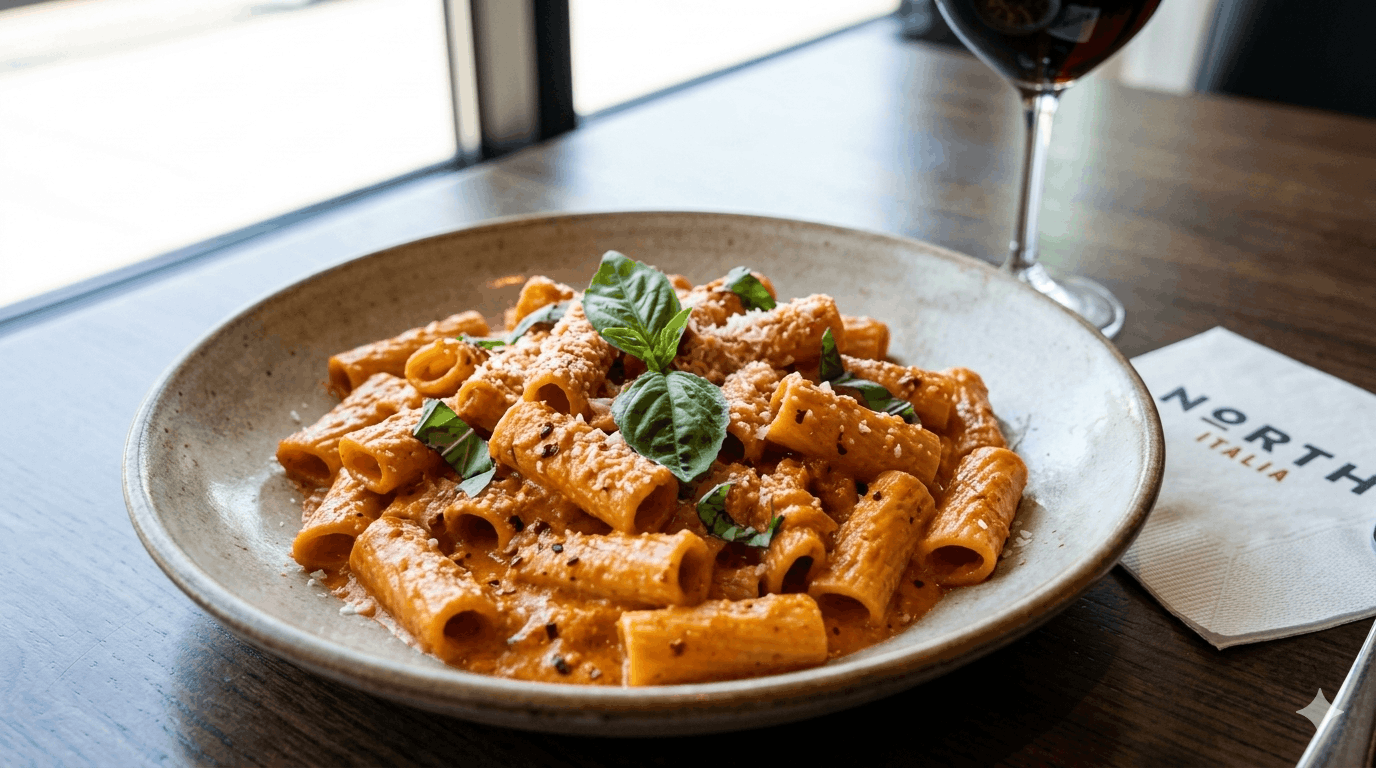
- Step 7 — Toss the pasta in the sauce and serve immediately. Add the drained rigatoni directly to the pan of sauce over low heat. Using tongs, toss the pasta with the sauce, turning it repeatedly for 1 to 2 minutes until every piece is thoroughly coated and the sauce has thickened slightly from contact with the hot pasta. If the sauce feels too thick, add pasta water one tablespoon at a time, tossing after each addition. The finished dish should look glossy and heavily sauced — every tube coated both inside and out with clinging orange-red cream. Serve immediately into warmed bowls. Finish each portion with a generous shower of freshly grated Parmigiano Reggiano, a few fresh basil leaves torn over the top, and if you are feeling particularly North Italia about it, a small pat of cold butter placed on top to melt at the table.
Video
Notes
- Calabrian chili paste is the key flavor differentiator: This is the ingredient that makes North Italia's vodka sauce taste distinctly different from a standard penne alla vodka. Calabrian chilies (from Calabria in southern Italy) have a fruity, smoky, medium heat that is more complex and layered than red pepper flakes. Look for it in the Italian foods aisle, at Trader Joe's (sold as "Italian Bomba Hot Pepper Sauce"), or online. If truly unavailable, use ½ teaspoon of red pepper flakes — the dish will still be good, but the flavor signature will be different.
- Toast the tomato paste — do not skip this: Two minutes of cooking the tomato paste against the hot pan before adding liquids caramelizes its natural sugars, deepens its color from bright red to brick-red, and transforms its flavor from raw and sharp to rich and rounded. This one step accounts for more flavor development than any other single action in the recipe.
- Blend the sauce for the restaurant texture: North Italia's sauce is noticeably smoother than a home-style vodka sauce because it is blended before the pasta is added. The immersion blender takes 30 seconds and produces a glossy, completely uniform sauce that looks and feels luxurious. If you skip this step, the sauce will still taste excellent but will have visible onion and chili pieces throughout.
- Salt your pasta water properly: Use at least 1 tablespoon of kosher salt per quart of water — the water should taste seasoned. Under-salted pasta cooking water produces pasta that tastes flat, regardless of how good the sauce is.
- Reserve more pasta water than you think you need: ½ cup is the recipe minimum, but set aside ¾ to 1 cup. The starchy pasta water is the primary tool for adjusting sauce consistency at the end — it loosens and emulsifies the sauce without diluting flavor the way plain water would. Keep it warm in a small heatproof cup next to the stove.
- Variation — with guanciale or pancetta: Render 3–4 oz of diced guanciale or pancetta in the pan before adding the olive oil, removing the crisped meat and cooking the aromatics in the rendered fat. Fold the crispy meat back in at the end. This adds a porky, salty richness that many North Italia regulars specifically request.
- Variation — with Italian sausage: Crumble 8 oz of hot Italian sausage into the pan after the aromatics are softened and cook until fully browned before adding the chili paste and tomato paste. The spiced sausage amplifies the heat of the Calabrian chili and adds protein and texture.
- Variation — with burrata: At service, place a half ball of fresh burrata in the center of each bowl before tossing the hot pasta over it. The heat of the pasta melts the burrata's outer shell and releases its creamy interior throughout the dish — an indulgent but extraordinary variation.
- Variation — heat level adjustment: The recipe as written is medium-heat. For mild: use ¼ teaspoon chili paste and remove all seeds if using whole chilies. For hot: increase to 1½ teaspoons chili paste and add a pinch of cayenne with the cream. For very hot: double the chili paste and finish each bowl with additional fresh Calabrian chili oil.
- Make-ahead: The sauce (through the blending step, before pasta is added) can be made up to 3 days ahead and refrigerated in an airtight container. Reheat gently over low heat, thinning with a splash of cream or pasta water as needed, before tossing with freshly cooked pasta. This is the ideal strategy for a dinner party — the sauce waiting on the stove, pasta boiled to order.
- Storage and reheating: Store leftover assembled pasta in an airtight container in the refrigerator for up to 3 days. To reheat: add 2 tablespoons of cream or milk per serving to a skillet over low heat, add the pasta, and stir gently until warmed through and the sauce has re-emulsified. The microwave works but produces a less smooth result — if using it, heat in 30-second intervals and stir between each.
- Freezing: The sauce alone freezes well for up to 2 months. The assembled pasta (sauce and rigatoni combined) does not freeze well — the pasta becomes mushy and the sauce breaks on thawing. Freeze only the sauce and cook fresh pasta when ready to serve.
- Scaling note: This recipe doubles cleanly for 8 servings. Use the same ratios and cook the sauce in a larger, wider pan to allow proper evaporation and caramelization. Do not reduce the cooking times proportionally — the onion and tomato paste still need the same amount of time regardless of quantity.